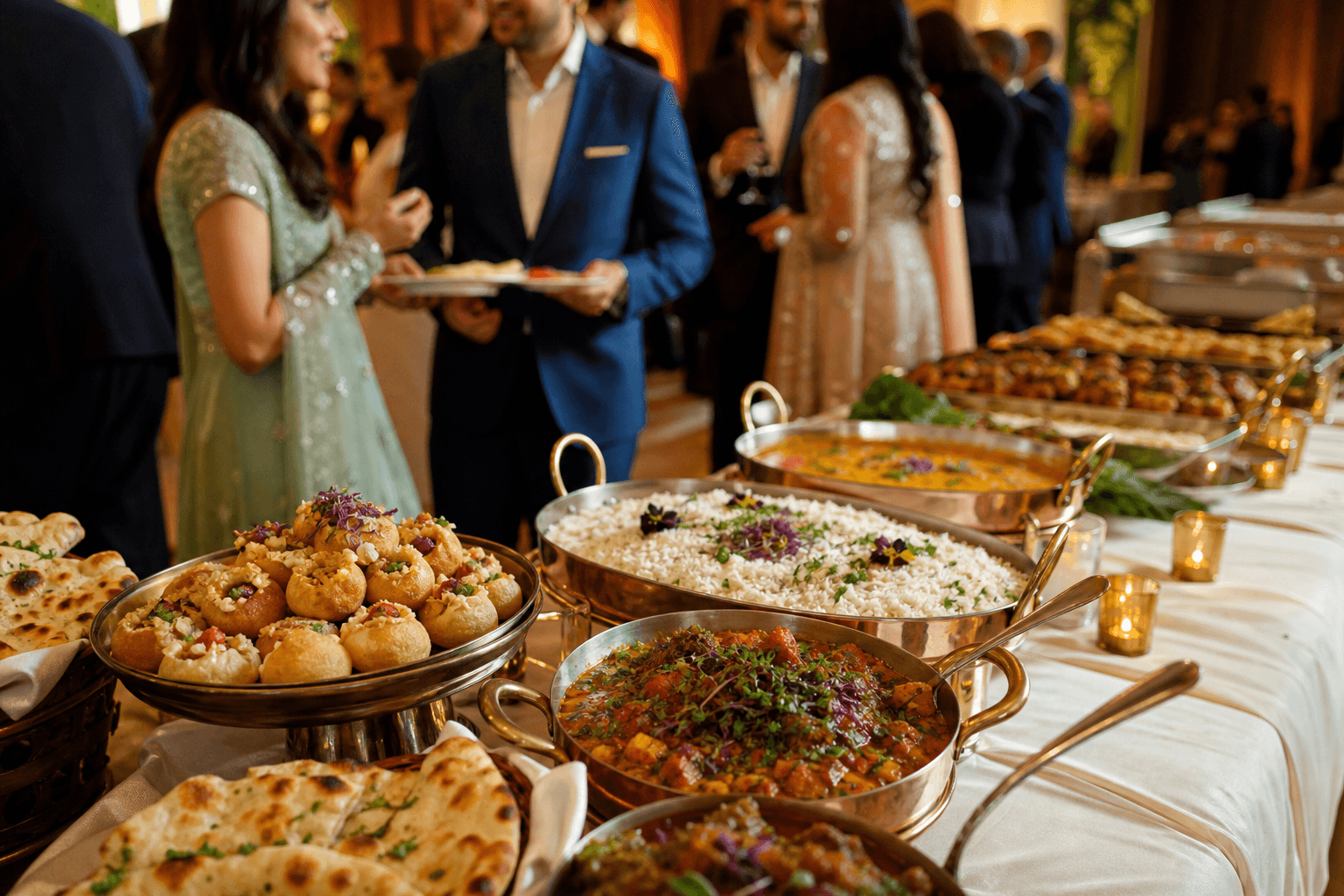
Planning an Indian fusion catering menu is easier when you decide the event format and guest needs before choosing individual dishes. Start with the occasion, venue, guest profile, service style, and timing. Then build a balanced menu with snacks, appetizers, mains, breads, rice, accompaniments, desserts, and drinks.
This approach works for weddings, corporate meals, family celebrations, community gatherings, and smaller house parties. It also helps you avoid selecting too many appealing dishes without considering how they will be served, kept at the right temperature, or enjoyed by the whole group.
Start with the Event and Guest Profile
The same menu will not suit every event. A relaxed house party may benefit from shareable small plates, while a corporate meal may require a more predictable service flow. A wedding or large family celebration may need a broad selection that accommodates different ages, appetites, and comfort levels with spice.
Before looking at dishes, write down the occasion, guest count, venue, seating arrangement, service time, dietary requirements, allergies, religious considerations, and spice preferences.
Ontario event-planning guidance treats the choice of catering services, venue, menu descriptions, and ingredients as decisions that should reflect the event’s theme and needs. Ontario’s event planning standard provides useful context.
Choose the Service Style Before Choosing Every Dish

Service style affects the menu more than many hosts expect. It determines how much movement is required, how guests access food, how portions are controlled, and what equipment or staffing the venue may need.
| Service style | Works well when | Points to confirm |
|---|---|---|
| Buffet | Guests want variety and flexible serving times. | Table space, replenishment, food holding, line flow, and labels. |
| Shared dishes | The event is social and guests are seated together. | Table space, serving utensils, portion expectations, and dietary separation. |
| Plated meal | The occasion is structured and the meal has a defined schedule. | Course timing, staffing, guest choices, and kitchen access. |
| Thali-style service | Guests want several components presented together. | Available dishes, individual serving logistics, and substitutions. |
A buffet usually gives guests the most choice, but it needs enough space and clear organization. Shared dishes feel communal, although guests may have less control over portions. Plated meals look orderly but require more coordination. Thali-style service creates a distinctive presentation but may be less flexible for groups with widely different preferences.
Do not assume that a restaurant’s regular dine-in format automatically translates to catering. Ask which service styles, staffing arrangements, equipment, and setup options are currently available.
Build a Balanced Indian Fusion Catering Menu
Organize the menu by function rather than simply listing favourite dishes. La Tikka Indian Fusion’s verified range includes street-style chaat, momos, Indo-Chinese dishes, tandoori specialties, sizzlers, North Indian mains, thalis, rice and biryani, breads, desserts, and beverages. These categories provide useful starting points, but current catering availability must be confirmed.
Welcome Snacks and Appetizers
Welcome snacks give guests something to enjoy while they arrive or begin conversations. Small portions of chaat or momos can add variety without making the event feel heavy immediately.
For either category, confirm whether items are served assembled or separately, how long their texture remains suitable, and whether sauces or toppings contain ingredients that need to be identified.
Mains and Signature Dishes
Choose mains that balance familiarity and discovery. North Indian dishes can give mixed groups a recognisable foundation, while Indo-Chinese options, tandoori specialties, and sizzlers can make the menu more distinctive.
Consider including a saucy main, a grilled or roasted-style option, and a dish with a different texture. If you include a sizzler, ask how it will be served and whether special equipment or timing is required.
Breads, Rice, and Accompaniments
Breads and rice provide structure and help guests combine different mains. Rice and biryani can serve as a substantial centrepiece, while breads work well with saucier dishes. Confirm what is included, and ask how these items will be packaged, held, and replenished.
Desserts and Beverages
Choose desserts that fit the event’s formality and serving space. Beverage planning should include non-alcoholic choices and venue rules. If alcoholic drinks are considered, confirm responsibility for licensing, service, glassware, and compliance.
Compare Indian Fusion Menu Directions
| Menu direction | Suitable for | Strength | Caution |
|---|---|---|---|
| Familiar North Indian menu | Mixed groups and formal gatherings. | Recognisable choices. | Confirm spice levels and ingredients. |
| Chaat and street-food menu | Social celebrations and informal parties. | Encourages sampling and conversation. | Confirm texture, assembly, and holding conditions. |
| Indo-Chinese variety | Groups seeking bold flavours. | Adds range beyond traditional mains. | Confirm current dishes and ingredients. |
| Tandoori and sizzler focus | Celebrations where presentation matters. | Creates visual interest. | Ask about equipment, timing, and heat retention. |
| Thali or shared dishes | Smaller seated gatherings. | Combines several components. | Confirm flexibility for dietary needs. |
Plan for Dietary Needs and Ingredient Questions
Do not infer that a dish is suitable for an allergy, dietary preference, or religious requirement from its name alone. Ingredients, sauces, marinades, garnishes, preparation surfaces, and cross-contact practices can affect suitability.
Ask which dishes can meet the group’s requirements, whether preparation differs from the regular menu, and how special meals will be identified and kept separate. Do not promise guests that a dish is vegetarian, vegan, gluten-free, allergen-free, or otherwise suitable until those details are confirmed.
Ontario’s broad definition of “menu” includes paper, electronic, online, advertising, and promotional formats. Ontario Regulation 50/16 provides the relevant definition, but event-specific ingredient information should still be requested.
Match the Menu to the Event Type
| Event type | Planning direction | Service style | Key constraint |
|---|---|---|---|
| Wedding or large celebration | Combine familiar mains with chaat, tandoori dishes, or a sizzler. | Buffet or shared service. | Guest flow, replenishment, venue rules, and timing. |
| Corporate meal | Use clear, balanced choices with accessible ingredients. | Buffet or plated service. | Break duration, punctuality, dietary records, and cleanup. |
| Family celebration | Mix familiar dishes with one or two new options. | Shared dishes or buffet. | Age range, seating, spice preferences, and portions. |
| Small house party | Use a compact combination of snacks, mains, rice or bread, and dessert. | Shared dishes or a small buffet. | Kitchen access, serving space, storage, and cleanup. |
For wedding planning, food is only one part of the schedule. A separate wedding entertainment planning guide can help illustrate why catering timing should be coordinated with other suppliers.
Confirm the Caterer and Venue Details
Before booking, request a clear summary identifying the current menu, serving format, guest-count assumptions, and responsibilities retained by you or the venue.
- Which dishes are currently available for catering in Kitchener or Hamilton?
- Can the menu address vegetarian preferences, allergies, spice concerns, or other requirements?
- How will ingredients and special meals be described and identified?
- What guest count is the proposal based on, and when is the final count due?
- Are delivery, setup, serving staff, equipment, rentals, and cleanup included?
- What venue restrictions apply to outside food, heating equipment, alcohol, or waste?
- What are the timing, payment, deposit, change, and cancellation terms?
Ontario event-planning guidance connects catering choices with venue, menu descriptions, ingredients, staff, suppliers, and contractors. Treat these as coordination points, not assumptions about any particular package.
Event Catering Menu Checklist
- Define the occasion, venue, date, service time, and guest count.
- Choose a service format the venue can support.
- Select a balanced combination of snacks, appetizers, mains, breads, rice, accompaniments, desserts, and beverages.
- Include familiar and distinctive choices where appropriate.
- Record dietary, allergy, ingredient, religious, and spice-related questions.
- Confirm current menu descriptions and dish availability.
- Confirm presentation, holding, replenishment, equipment, and staffing.
- Clarify delivery, setup, rentals, venue access, cleanup, payment, and cancellation responsibilities.
- Share final menu and special-meal information with the venue and event team.
Frequently Asked Questions
How do I plan an Indian catering menu for guests with different spice preferences?
Include varied flavour profiles rather than making every dish equally spicy. Ask the caterer to confirm preparation and serving options, and label dishes clearly.
Is a buffet or shared-dish format better for an Indian fusion event?
A buffet offers more choice and portion flexibility, while shared dishes create a communal meal. Choose based on the venue, seating, staffing, and confirmed catering capabilities.
What should I confirm about allergies and ingredients?
Ask for current ingredient information, preparation details, possible cross-contact concerns, and a clear method for identifying special meals. Never assume suitability from a dish name.
Can a small house party use the same menu structure as a large event?
Yes, but it usually needs fewer dishes and simpler service. Prioritize a compact balance of snacks, mains, rice or bread, and dessert.
How early should I confirm an Indian catering menu?
Contact the caterer once you know the approximate date, guest count, venue, and service format so availability and logistics can be confirmed directly.
Choose the Menu That Fits the Event
The best event catering menu is not the longest one. It matches the occasion, gives guests enough choice, works with the service format, and can be delivered safely within the venue’s practical limits.
Begin with the event and guest profile, choose the service style, build balance across menu categories, and confirm availability, ingredients, staffing, equipment, timing, venue responsibilities, and booking terms.
For an event in Kitchener or Hamilton, discuss your menu direction and catering requirements with La Tikka Indian Fusion. Its verified range includes Indian fusion, North Indian, Indo-Chinese, chaat, sizzler, tandoori, rice, dessert, and beverage options. Availability and event-specific arrangements should be confirmed directly.