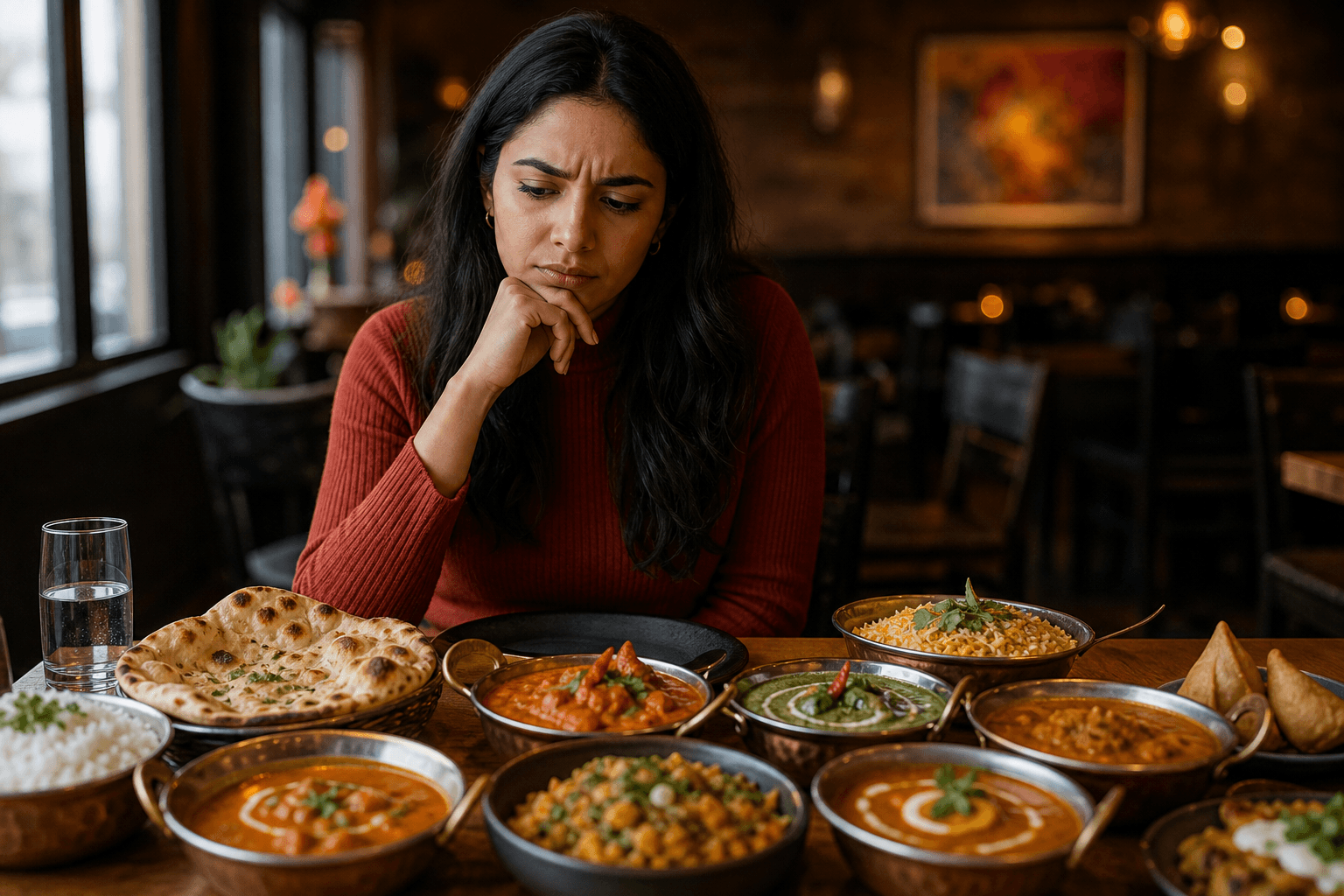
If you are comparing Hamilton Indian restaurant flavors for a night out or an event, start by asking the right questions. This article lists seven common mistakes that lead to disappointing menus or inconsistent catering, with quick verification steps and realistic tradeoffs. The checklist will help you choose between authentic North Indian, street-style chaat, Indo-Chinese Hakka dishes, sizzlers, and late-night bar energy.
Quick checklist: seven flavor mistakes that cost your meal
- Trusting vague “authentic” claims without verification
- Assuming a very broad menu equals consistent quality
- Confusing Indo-Chinese with generic Chinese flavours
- Presuming spice flexibility and dietary coverage
- Reading only a few reviews instead of recent patterns
- Expecting the same signature dishes at Happy Hour or late night
- Not confirming catering tasting, scaling, and reheating details
Mistake 1 - trusting 'authentic' without signals: how to verify the flavor promise
Why it matters
The word "authentic" is widely used, but it can mean strict regional technique, family recipes adapted for local palates, or a broadly inspired menu. If authenticity is your priority, vague claims can mask a mixed approach that leans toward fusion rather than a faithful regional style.
How to verify quickly
- Scan the menu for specific regional dishes, for example Punjabi sarson, Hyderabadi biryani, or Goan fish curry, rather than generic labels like "Indian curry".
- Look for chef notes, provenance, or signature dishes on the site or menu PDF; restaurants that highlight a Butter Chicken or Paneer Shashlik Sizzler as chef recommendations usually show intent and craft. La Tikka highlights Butter Chicken and Paneer Shashlik Sizzler on its site (La Tikka).
- Ask whether ingredients or spice blends are sourced or prepared in-house if authenticity matters to you.
Tradeoffs
Authenticity can mean stronger or more unfamiliar heat and spice profiles. If you want a crowd-pleasing option, a thoughtful fusion restaurant may be preferable. If you prioritise a particular regional flavour, look for a specialist or an explicit menu section that names the region.
Mistake 2 - assuming a very broad menu equals mastery: what menu breadth hides
Why it matters
Menus that include chaat, momos, Indo-Chinese Hakka noodles, tandoori, sizzlers, burgers, and desserts can be exciting for groups, but breadth sometimes hides inconsistent execution. High diversity increases the number of recipes and techniques the kitchen must master.
How to spot depth
- Count how many dishes appear under a category. Multiple regional items under one heading suggest depth; a single "Hakka noodles" line with no variations suggests token inclusion.
- Open the restaurant’s menu PDFs when available to check portion descriptions and dedicated sections; La Tikka posts location-specific menus, which help you see whether offerings are intentionally broad or curated for each site (Kitchener menu) and (Hamilton menu).
- Look for chef specials or signature plates; those indicate a few core dishes the kitchen focuses on getting right.
When breadth is a strength
A wide menu is valuable for mixed groups and events where tastes vary. If you need variety and accept some tradeoffs in depth, a broad menu can be the correct choice. For a tasting-focused evening, choose a narrower, specialist menu instead.
Mistake 3 - confusing Indo-Chinese with generic 'Chinese': reading flavor cues

Why it matters
Indo-Chinese is a distinct fusion cuisine with its own techniques, sauces, and spice balances: think Hakka noodles, chilli momos, and schezwan-style sauces adapted with Indian aromatics. Treating it as interchangeable with Cantonese or Szechuan cuisine will lead to mismatched expectations.
How to verify
- Look for menu terms like "Hakka", "chili momo", "schezwan", or "Indo-Chinese" rather than generic "Chinese".
- Check whether sauces are described, for example sweet-savoury chilli or schezwan spice, and whether they pair with Indian breads or rice; that signals handled fusion rather than one cuisine copied onto another.
- Menus that present Indo-Chinese items alongside chaat and tandoori specialties typically indicate an intentional fusion offering (La Tikka).
Tradeoffs
Indo-Chinese often uses more oil, sugar, and bold sauces than North Indian curries. Choose Indo-Chinese when you want punchy, saucy dishes for sharing; choose North Indian when you want layered spice, slow-cooked gravies, or tandoori textures.
Mistake 4 - assuming spice and dietary needs are flexible: checklists for heat, veg, and allergens
Why it matters
Spice tolerance, vegetarian or vegan preferences, and allergen concerns shape a dinner more than many people expect. Not all restaurants scale heat accurately, and not all vegetarian dishes are vegan or allergy-safe by default.
Quick checks before booking or ordering
- Ask if spice levels are adjustable and how the kitchen defines "mild, medium, hot".
- Confirm which dishes are strictly vegetarian and which are vegan; vegetarian Indian dishes often include ghee or dairy unless explicitly marked.
- Request allergen handling procedures for cross-contact sensitive guests, and ask catering teams for ingredient lists when planning for events.
Tradeoffs
Lowering heat can change balance and authenticity, but guest comfort often takes priority for groups. If you require strict allergen controls, confirm them in writing and consider a tasting or pre-event discussion.
Mistake 5 - reading only a few reviews: how to spot consistency and recent patterns
Why it matters
A single five-star or one-star review is noise. Review volume, date distribution, and management responses reveal more about consistency than isolated ratings.
How to verify consistency
- Look for a steady rating trend and many recent reviews rather than an old, high rating with few updates. La Tikka’s local profiles show strong ratings and many recent reviews, which is a useful signal when evaluating consistency (La Tikka).
- Examine recent photos uploaded by diners for plating, portion size, and apparent freshness.
- Check whether the owner or manager replies to reviews; proactive replies indicate attention to quality control.
Tradeoffs
New restaurants may have fewer reviews but strong menus. When a new spot looks promising, plan a short visit or order a small tasting before committing a large event.
Mistake 6 - expecting the same flavor experience at Happy Hour or late night

Why it matters
Happy Hour and late-night menus often prioritise speed, shareability, and cost. Portions, spice level, and availability of signature mains can change by shift. If you are visiting for a particular dish, confirm its availability during your time slot.
How to verify
- Check the restaurant’s Happy Hour notes and hours; La Tikka advertises daily Happy Hours and highlights special food and drink deals on its site (La Tikka).
- For Hamilton specifically, confirm late-night hours and whether the bar service affects kitchen focus; the Hamilton menu PDF can show items reserved for full service vs Happy Hour (Hamilton menu).
- Call ahead to confirm a signature plate is available during your planned visit.
Tradeoffs
Happy Hour is great for sample-style sharing and value. For a full tasting of signature flavours, choose a dinner reservation during full-service hours or call to confirm availability.
Mistake 7 - not checking catering flavor consistency: the three questions to ask
Why it matters
Catering requires replicable portioning, heat control, and reheating guidance to deliver consistent flavours across plates and service windows. Lack of clarity here is the most common event planning pitfall.
Three essential questions
- Can we sample tasting portions before the event so you can approve heat and portion size?
- How will you scale spice and seasoning for 20, 50, or 200 guests, and what are the written instructions for reheating on site?
- What service options do you offer, drop-off, staffed buffet, or full service, and what does each include?
Tradeoffs
On-site staffed service costs more but reduces reheating and portioning risk. For large events where precise flavor and timing matter, budget for a tasting and a staffed setup where possible.
Common tradeoffs and objections when you prioritise flavors
- Price sensitivity: Authentic and specialist kitchens cost more. If budget is tight, prioritise a single signature dish and complement with lower-cost accompaniments.
- Picky eaters: A broad-menu fusion place covers many tastes, while a specialist delivers depth. For mixed groups, choose variety; for connoisseurs, choose a specialist.
- Late-night crowd: Bar and late-night menus favour shareable, bold flavours. Decide whether atmosphere or culinary detail matters more for your plan.
- Dietary restrictions: If allergies or strict vegan needs exist, require ingredient lists and reheating instructions from the caterer.
Decision grid and booking checklist for Hamilton visits or events
Use case checks
- Late-night meet-up: Confirm late service hours and whether signature mains are available; check the Hamilton menu PDF for late-night availability (Hamilton menu).
- Happy Hour social: Verify which dishes are on the Happy Hour menu and whether portion sizes meet your group’s needs; La Tikka lists daily Happy Hours on its website (La Tikka).
- Family dinner: Ask about spice control, children’s options, and vegetarian choices before booking.
- Catered event: Book a tasting, request written reheating instructions, and confirm service style in advance.
Booking checklist
- Confirm the exact dish availability and menu PDF for the location you will visit or book.
- Ask for recent photos of the dish as served at the location.
- Request a tasting or sampling portion for events when possible.
- Obtain written allergen and reheating instructions for catered food.
- Reserve by phone or the restaurant contact page and confirm headcount and arrival window (reservations).
Hamilton location details and booking links are available through the restaurant site. If you want to check locations and hours before calling, see the locations section (La Tikka locations).
Frequently asked questions
How do I tell if a Hamilton Indian restaurant serves authentic North Indian flavours or a fusion menu?
Check the menu for named regional dishes and chef notes. A specialist will list specific regional recipes, while a fusion menu will mix categories like chaat, Indo-Chinese, sizzlers and burgers. La Tikka positions itself as an Indian fusion restaurant blending North Indian and Indo-Chinese items, with chef-recommended plates highlighted on the site (La Tikka).
Should I pick Indo-Chinese or North Indian dishes for a mixed group in Hamilton?
For mixed groups, Indo-Chinese offers shareable, saucy plates that travel well; North Indian mains provide depth and are better for sit-down dinners where rice and breads are central. If you need both, pick a venue with a dependable broad menu or a caterer that can scale both styles.
What questions should I ask when booking Indian catering in Hamilton to ensure flavor consistency?
Ask for a tasting, written reheating instructions, a sample menu scaled to your headcount, and clarification on spice control. If you require regulatory or licensing clarity for vendors, contact the local municipal business services.
Are there late-night Indian dining options in Hamilton that still serve signature dishes?
Some Hamilton locations operate late and include bar service. Verify late-night hours and whether signature items are on the late menu; check the Hamilton menu PDF to confirm which items are available during extended hours (Hamilton menu).
How can I check a Hamilton Indian restaurant will handle spice levels and vegetarian needs?
Call the restaurant and ask how they define spice levels, which dishes are vegetarian or vegan, and whether they can prepare a milder version. For events, request ingredient lists and confirm cross-contact procedures.
Which Hamilton Indian restaurant flavors matter most to your plan: late-night bar energy, Happy Hour value, authentic regional depth, or reliable catering, and would you like to make a reservation or request a tasting at La Tikka Indian Fusion?