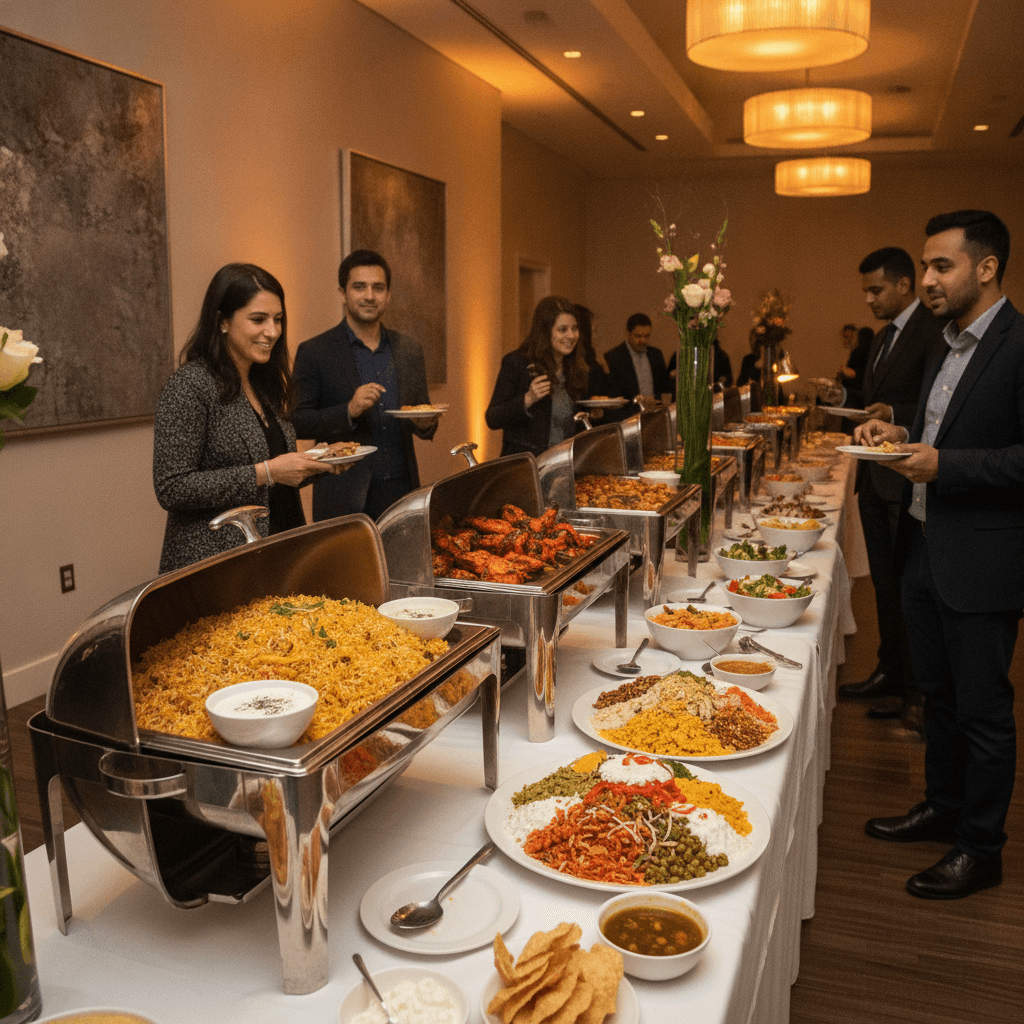
Hamilton Plaza Indian catering for events is the full-service planning and delivery of Indian and Indo-Chinese menus for gatherings near Hamilton Plaza, from corporate meetings to weddings. It blends crowd-pleasing classics with practical logistics so food arrives on time, stays hot, and serves every guest—including vegetarian and other dietary needs.
By Deep Soni • Last updated: 2026-07-06
At a Glance: What You’ll Get in This Guide
This complete guide explains how to plan Hamilton Plaza Indian event catering with clarity. You’ll learn menu design, portioning, timelines, service styles, dietary planning, and on-site logistics. We use La Tikka Indian Fusion’s real menu strengths—chaat, momos, Indo-Chinese, tandoori, sizzlers, biryani, and thali—as practical examples you can apply immediately.
Planning food for a crowd is exciting—and a little nerve-wracking. This guide is built to save you time and reduce risk.
- Clear definitions of Indian catering for Hamilton Plaza events
- Actionable timelines, staffing ratios, and buffet setup dimensions
- Menu blueprints using La Tikka’s chaat, momos, Hakka, tandoori, sizzlers, and biryani
- Dietary, allergen, and cultural considerations for inclusive service
- Local tips near Hamilton Plaza to streamline drop-off and setup
What Is Hamilton Plaza Indian Event Catering?
Hamilton Plaza Indian event catering refers to planning, cooking, transporting, and serving Indian and Indo-Chinese dishes for gatherings near Hamilton Plaza. It covers menu design, portioning for guest count, hot-hold logistics, buffet flow, and dietary accommodations so every plate is hot, flavorful, and on time.
In practice, that means turning classic Indian flavors into smooth, scalable service. La Tikka Indian Fusion supports this with a wide menu: street-style chaat, momos, Indo-Chinese Hakka dishes, tandoori specialties, sizzling platters, biryani, and thali-style combinations.
- Core elements: guest count, menu mix, service style, delivery route, setup timing, and cleanup plan.
- Portion planning: 8–10 appetizer bites per guest, 1–2 mains, 1 starch, and 1–2 sides typically cover 120–180 minutes of service.
- Setup timing: Budget 45–60 minutes for a standard buffet line; add 20–30 minutes if you’re activating live stations.
- Line speed: One 12–16 foot buffet with two access points can serve ~100 guests in 15–20 minutes when dishes are pre-labeled.
Because La Tikka operates in both Kitchener and Hamilton, we’ve seen how menu variety improves guest satisfaction. When guests can choose between, say, Butter Chicken and Paneer Shashlik Sizzler plus Hakka Noodles and biryani, plate waste drops and repeat visits rise.
Why Indian Catering Near Hamilton Plaza Matters
Indian catering near Hamilton Plaza delivers big flavor diversity, efficient buffet throughput, and inclusive options for vegetarian and other diets. For planners, it reduces risk: predictable setup times, proven crowd-pleasers, and flexible service styles adapt to corporate, social, and cultural events year-round.
Great catering does more than feed people. It sets the event’s energy, controls wait times, and quietly solves dietary needs.
- Flavor range drives satisfaction: Offering chaat, momos, Hakka noodles, and tandoori skewers means every guest finds a favorite. Expect higher positive feedback when menus include at least one familiar and one adventurous dish per plate.
- Predictable timing: Pre-staged chafers stabilize service at ~5–7 guests per minute. Live stations add theater but require line management (one attendant per 40–50 guests).
- Inclusive by design: Indian cuisine naturally supports vegetarian and many dairy-free options; label dishes for peanuts, gluten, and dairy so guests self-select fast.
- All-day adaptability: From 45-minute working lunches to late-night celebrations, formats like sizzlers or wok-fired Hakka adapt to tight timelines.
We’ve found that events offering two proteins, one paneer or vegetable main, one noodle or rice, and one chaat or momo appetizer hold guest attention better, keep lines moving, and reduce rework for staff.
How Indian Catering Works with La Tikka
La Tikka’s Hamilton-area catering follows a simple arc: discover needs, design the menu, lock logistics, execute on-site, and wrap with a quick cleanup. Clear timelines, labeled pans, and a dedicated point of contact ensure hot, on-time service from drop-off to last plate.
Here’s a planning flow we use for Hamilton Plaza events. It keeps your caterer, venue, and volunteers aligned while protecting hot-hold quality.
- Discovery (10–15 minutes): Event type, headcount bands (in 10–25 increments), dietary constraints, service window, venue access notes.
- Menu design (24–48 hours): Choose one chaat or momo, two mains (e.g., Butter Chicken + Paneer Shashlik Sizzler), one Hakka or biryani, and one bread or side. Confirm vegetarian ratios (often 30–40%).
- Logistics lock (7–10 days out): Floor plan, table sizes, power routing for warmers, elevator/entry path, contact on arrival. Aim for 12–16 linear feet per 100 guests.
- Final count (72 hours out): Confirm headcount and labelled dietary flags. Add 5–10% buffer portions for last-minute attendees.
- Delivery + setup (60–90 minutes): Chafers hot at 165°F+, ladles/tongs staged, signage placed. Stagger refills to protect texture on items like Hakka noodles and tandoori.
- Service window (60–180 minutes): Keep a runner on sizzlers and high-demand mains; plan 12–15 minutes to clear 50 guests through a well-staffed line.
- Wrap + breakdown (20–30 minutes): Seal leftovers safely, pack equipment, and confirm exit path is clear.
Small adjustments matter. For instance, placing momos before sauced mains keeps plates from getting overloaded early, and labeling heat-level (mild/medium) helps guests self-regulate spice.
Service Styles and When to Use Each
Choose a service style that matches pace and vibe. Buffets move lines fastest, live stations add theater, and drop-off works for tight venues. For Hamilton Plaza events, La Tikka commonly runs buffets with optional chaat, momo, or tandoori live stations to boost engagement.
Service style drives staffing, layout, and guest experience. Use this quick comparison to decide what fits your event goals and space.
| Style | Best for | Line speed | Staffing | Notes |
|---|---|---|---|---|
| Buffet | 100–300 guests, corporate, festivals | Fast (5–7 guests/minute) | 1–2 attendants per 100 guests | Most efficient; easy to label vegetarian and spice levels. |
| Live station (chaat, momos, tandoori) | Showpiece moments, receptions | Moderate; depends on station count | 1 attendant per station + runner | High engagement; ideal near entrances to disperse crowds. |
| Drop-off (self-serve) | Office lunches, condo spaces | Varies with host setup | Host team handles line | Great for small rooms; confirm tables, power, and utensils. |
| Family-style (table share) | Intimate dinners, VIP rooms | Slower; seated service | Runner + table attendants | Encourages conversation; portion bowls per 6–8 guests. |
La Tikka’s menu travels well in each format. Sizzlers should be served promptly for aroma effect; Hakka noodles love quick replenishment in smaller batches; biryani holds heat and fragrance for 60–90 minutes when lidded.
Menu Planning Blueprints by Event Type
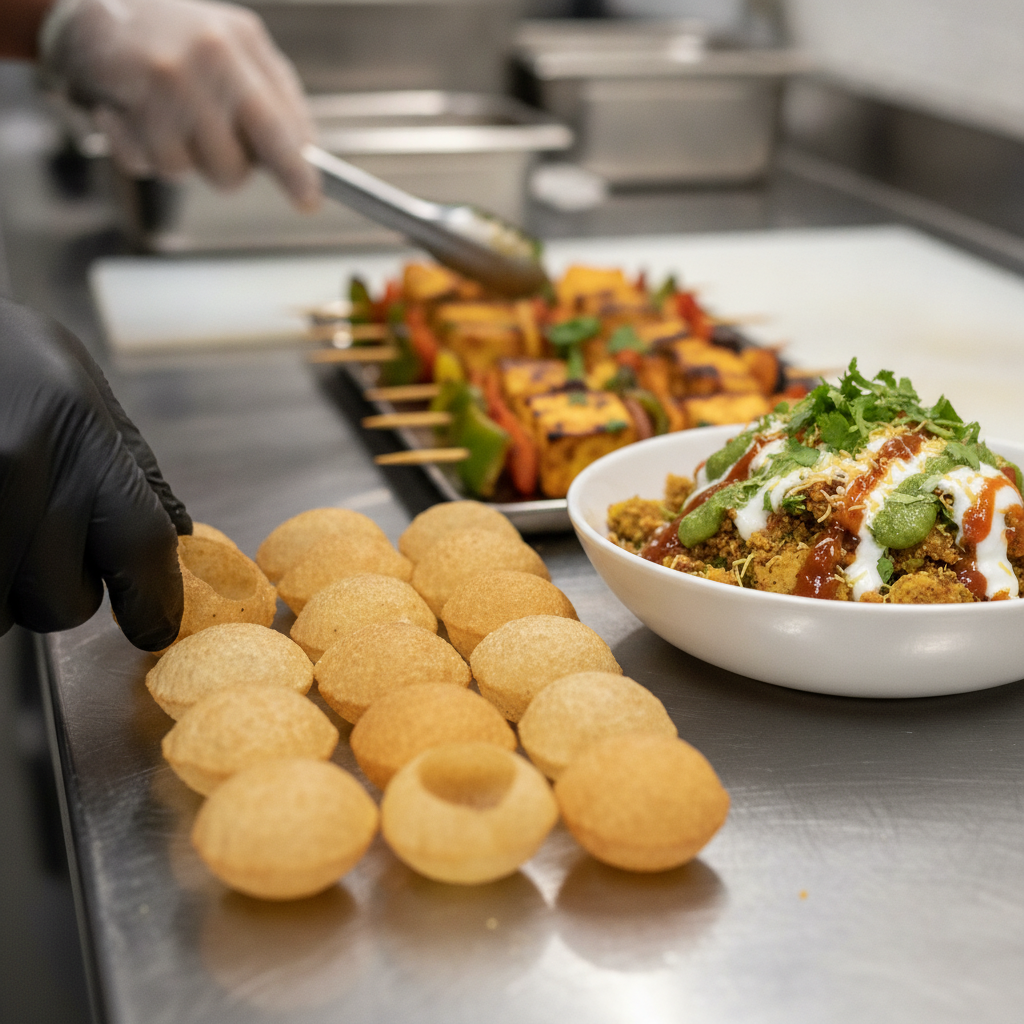
Build menus around crowd-pleasers and balance: one chaat or momo, two mains (including one vegetarian), one noodle or rice, and a bread or side. For Hamilton Plaza, La Tikka’s Butter Chicken, Paneer Shashlik Sizzler, Hakka Noodles, biryani, and chaat platters cover flavor, pace, and dietary range.
Use these ready-to-run blueprints and adjust by headcount bands (±25 guests). They’re designed around La Tikka’s real strengths.
Corporate lunch (60–120 minutes)
- Appetizer: Samosa chaat or pani puri tray (8–10 bites per guest).
- Mains: Butter Chicken; Paneer Shashlik Sizzler.
- Sides: Hakka Noodles; Jeera rice or biryani.
- Breads: Naan or roti; label for dairy.
- Notes: Keep chaat up front; pre-label spice levels for faster line flow.
Social celebration or birthday
- Appetizer: Momos (steamed with chutneys) or Kurkure Momo for crunch.
- Mains: Tandoori chicken skewers; Paneer tikka or mixed veg gravy.
- Sides: Bombay bhel bowl; Hakka Noodles or fried rice.
- Sizzle moment: A dedicated sizzler pass for short bursts—great for photos and energy.
Cultural festival or community night
- Appetizer: Pani puri + samosa chaat combo line.
- Mains: Butter Chicken; Chana masala or dal for large vegetarian base.
- Sides: Biryani pans + fresh salad bowls.
- Live station: Momo or chaat counter draws traffic and spreads the crowd.
Wedding welcome or next-day brunch
- Appetizer: Dahi bhalla chaat and paneer tikka sticks.
- Mains: Paneer Shashlik Sizzler; a lighter chicken or veg curry.
- Sides: Biryani; Aloo tikki chaat for crunch and tang.
- Dessert cue: Offer small-format Indian sweets on a separate table to ease buffet pressure.
For dessert planning and menu sequencing, a practical cross-check from outside sources can help with pacing and portion ideas. For instance, a brief overview of event menu sequencing appears in an article on wedding catering planning, while a broad guide to Indian desserts can inspire compact sweet bites that won’t slow your line.
Local considerations for Hamilton Plaza
- Time your drop-off around local traffic pulses and nearby attractions. If guests are arriving from photo sessions at Victoria Park, plan a 15–20 minute cushion before opening lines.
- Summer weekends fill fast; book live stations early and confirm outdoor power and shade if you’re activating grills.
- Indoor museum or gallery events (like those near the Schneider Haus National Historic Site) may require quiet electric warmers—confirm venue policies in advance.
Need a second set of eyes? Share your guest count, dietary mix, and room layout. We’ll map a balanced La Tikka menu and a minute-by-minute service plan tailored to Hamilton Plaza venues.
Dietary, Allergen, and Logistics Best Practices
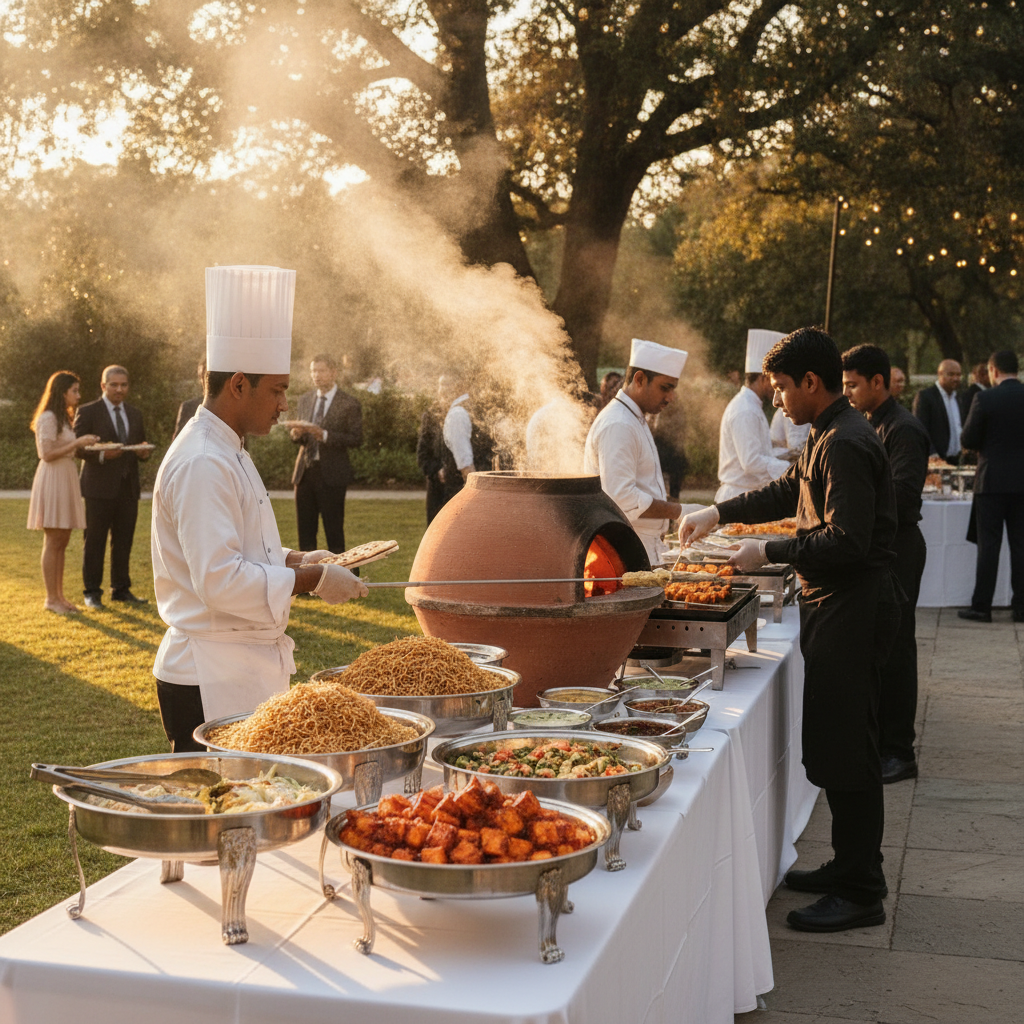
Set clear labels and flow. Provide vegetarian mains, gluten-aware sides, and nut-aware signage. Stage chafers at 165°F+, place mild items first, and split queues with two access points. For Hamilton Plaza events, confirm venue power, elevator paths, and table counts 7–10 days ahead.
Inclusive menus reduce service friction and protect your guests. Smart staging protects texture and heat.
- Labeling: Use clear tags for vegetarian, vegan, contains-dairy, and contains-nuts. Place spice-level markers at eye height.
- Queue design: Two-sided buffet clears ~100 guests in 15–20 minutes. Add satellite chaat or momo points to spread demand.
- Heat and hold: Keep hot foods at safe temps and rotate Hakka noodles in smaller waves (6–8 lbs at a time) to preserve wok-kissed texture.
- Allergen separation: Dedicate tongs/ladles for nut-containing desserts and place them at the end of the line to reduce cross-contact.
- Sizzler timing: Serve in bursts; audible sizzle and aroma impact peak in the first 2–3 minutes, so coordinate with emcee or DJ cues.
- Room layout: A 6-foot table holds four half-pans or two full pans comfortably; plan 12–16 feet per 100 guests for a standard line.
If your theme leans traditional or you want plated variety on a single tray, the thali concept is a useful reference—multiple small portions balancing sweet, sour, salty, bitter, and spicy. For an explainer, see this thali overview.
Tools, Checklists, and Resources
Use simple tools and checklists: a headcount tracker, portion calculator, and a one-page run-of-show. Map a 60–90 minute setup window and confirm power, tables, and elevator access. Pair La Tikka’s menu variety with clear labels for a fast, inclusive service line.
Here’s a compact toolkit we share with planners. Copy and adapt to your event.
One-page run-of-show (printable checklist)
- Arrival window: 60–90 minutes before doors
- Tables and power checked; warmers staged
- Buffet map taped; signage placed
- Food sequence: chaat → momos → mains → noodles/rice → breads → salads → desserts
- Dietary table tent cards and serving utensil plan
- Refill cadence: every 8–12 minutes for high-demand items
- Breakdown path cleared; leftovers packed safely
Portion calculator (rules of thumb)
- Appetizers: 8–10 bites per guest (mix crunchy + soft)
- Mains: 6–8 ounces cooked per guest across two mains
- Starch: 4–6 ounces per guest (noodles + rice or biryani)
- Salads/sides: 3–4 ounces per guest
- Desserts: 2–3 mini pieces per guest if plated separately
Room and line planning
- One 12–16 foot buffet per ~100 guests; two access points
- Live stations near entrances to split traffic
- Dedicated allergen zone for nut-containing sweets
- Audio cue alignment for sizzler bursts and toasts
Keep copies of the floor plan at the host table and with the catering lead. When everyone can see the map, line improvisation drops and the room feels calmer.
Real-World Examples and Mini Case Studies
Successful Hamilton Plaza events share patterns: balanced menus, clear labeling, and thoughtful layout. Using La Tikka’s chaat, momos, tandoori, Hakka noodles, and sizzlers, planners achieved fast lines and high feedback. These scenarios show guest counts, pacing, and small changes that made a big difference.
Corporate town hall, 120 guests
- Menu: Samosa chaat, Butter Chicken, Paneer Shashlik Sizzler, Hakka Noodles, biryani, naan.
- Flow: Two-sided buffet; chaat up front; labels for mild/medium.
- Timing: 60-minute meal block; line cleared in ~18 minutes.
- Lesson: Keeping noodles in smaller refresh waves preserved texture to the last plate.
Community fundraiser, 220 guests
- Menu: Pani puri + samosa chaat, tandoori skewers, chana masala, biryani, salad bowls.
- Flow: Buffet + satellite chaat point at room entrance to split the crowd.
- Timing: 90-minute service; average 6–7 guests/minute at peak.
- Lesson: A single extra chaat point near the door dropped initial wait times by ~30%.
Birthday reception, 75 guests
- Menu: Kurkure Momo, Paneer tikka, mixed veg curry, Hakka Noodles, jeera rice.
- Flow: L-shaped buffet against a wall; labeled vegetarian options.
- Timing: Setup 50 minutes; lines stayed under 8 minutes all evening.
- Lesson: Pre-setting dessert minis on a separate table kept the main line fast.
Wedding welcome night, 160 guests
- Menu: Dahi bhalla chaat, Butter Chicken, Paneer Shashlik Sizzler, biryani, salad, naan.
- Flow: Buffet with a sizzler moment coordinated to music cues.
- Timing: 80-minute service; two access points; steady replenishment.
- Lesson: DJ cue + sizzler bursts created a signature memory and guided guests back to tables smoothly.
Frequently Asked Questions
Planners ask about portioning, dietary labeling, timing, and whether live stations fit their room. These quick answers cover the most common decisions for Hamilton Plaza Indian event catering so you can finalize menus, layouts, and service windows with confidence.
How far in advance should I confirm my Hamilton Plaza Indian catering for events?
Lock core details 7–10 days ahead: headcount bands, floor plan, tables, and power. Share dietary flags at least 72 hours before service, then add a 5–10% buffer for last-minute attendees. This timing protects food quality and setup speed.
What’s the best service style for a 100–200 guest event?
A two-sided buffet with labeled stations moves guests fastest—about 5–7 people per minute. Add a chaat or momo live point near the entrance to disperse traffic. Use smaller, more frequent refills for noodles and sizzlers to maintain texture and aroma.
How do we handle vegetarian and potential allergens?
Include at least one vegetarian main and a gluten-aware side, then label all dishes clearly—vegetarian, contains-dairy, contains-nuts, and spice level. Keep nut-containing desserts at the end of the line with separate tongs to reduce cross-contact.
Can La Tikka support late-night service energy?
Yes. Sizzlers and Hakka noodles excel at late-night service because they re-energize the room and hold well in small-batch replenishment. Coordinate short, timed passes so aroma and visual impact remain strong without crowding the line.
Conclusion and Next Steps
Hamilton Plaza Indian event catering succeeds when menus balance familiar favorites with lively stations and thoughtful labeling. Map a 60–90 minute setup, two-sided buffet, and small-batch refills. La Tikka’s chaat, momos, tandoori, sizzlers, noodles, and biryani make planning fast and guest-friendly.
Key takeaways you can act on today:
- Use the 1–1–2–1 formula: one chaat/momo, one vegetarian main, two mains total, one noodle/rice.
- Design a two-sided buffet with clear labels; add one live point to split traffic.
- Confirm floor plan, tables, and power 7–10 days out; share dietary flags 72 hours out.
- Stage sizzlers in timed bursts; refresh noodles in smaller waves to protect texture.
Ready to plan your Hamilton Plaza Indian catering for events? Share your guest count and room map—we’ll build a La Tikka menu plan that fits your timeline and elevates the experience.