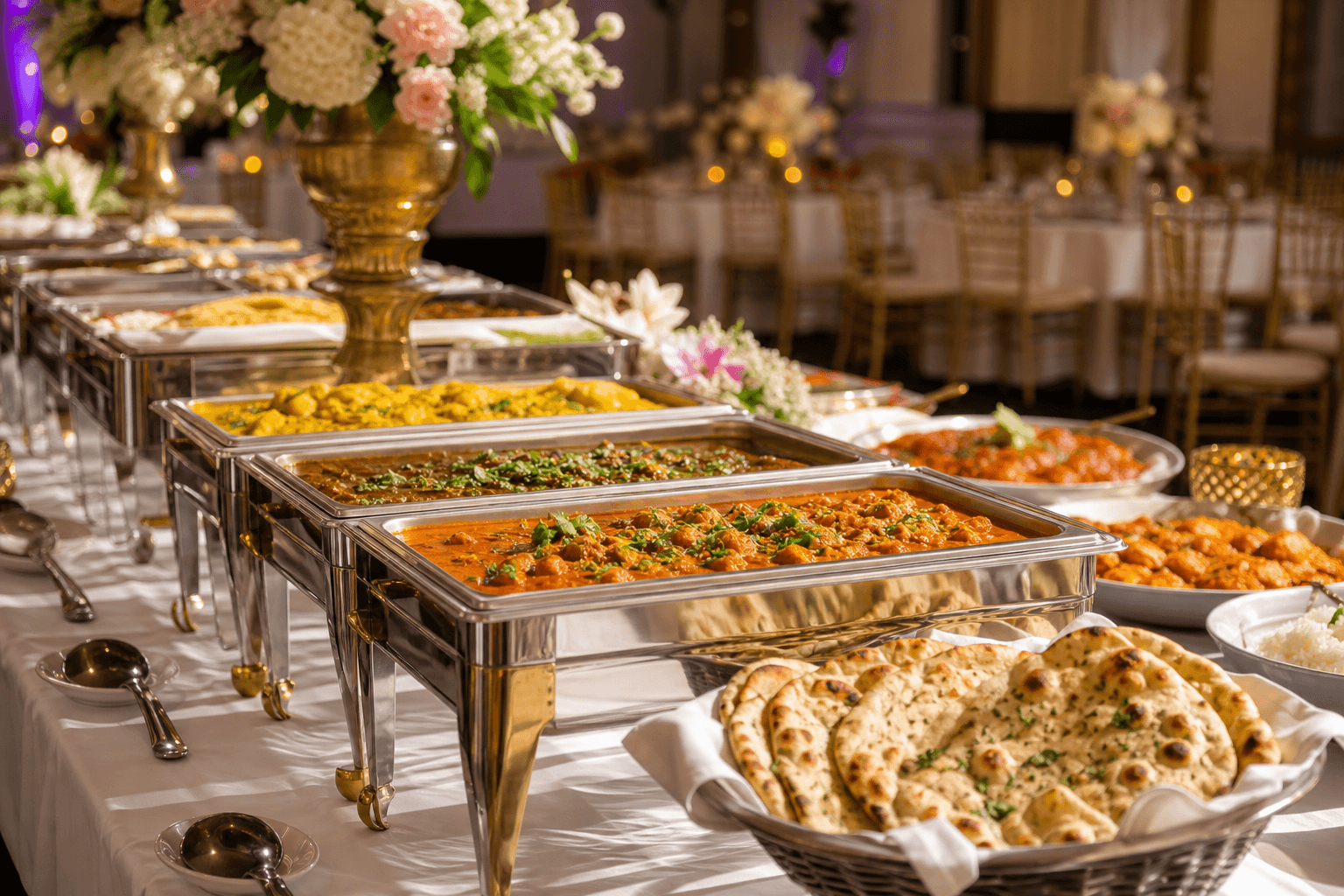
If you are arranging Indian or Indian-fusion catering for a Hamilton event, this compact decision checklist tells you exactly what to confirm when comparing vendors, checking venue requirements, and requesting quotes or tastings. Use it to verify menu fit (chaat, momos, Indo-Chinese, sizzlers, biryani, thalis), allergen handling, staffing and hot-holding, lead times and pricing transparency, plus the Hamilton-specific vendor paperwork you should request before you book.
One-page decision checklist you can use now
At a glance: immediate yes/no checks
- Does the caterer offer Indian or Indian-fusion menus that match your event style: chaat, momos, Indo-Chinese, sizzlers, biryani, thali?
- Can they confirm the service format you want: plated, buffet, stations, or passed hors d'oeuvres?
- Will they provide written proof of commercial liability insurance and food-safety training on request?
- Are tasting options available before you commit?
- Do they deliver, set up, and remove service equipment, or will the venue supply it?
Before you call: quick facts to gather
- Event date, start and finish time, expected guest count and number of children or seniors.
- Venue contact, on-site facilities such as kitchen access, power points and loading area, and any vendor rules.
- Dietary needs summary: vegetarian, vegan, gluten free, nut allergies, religious restrictions.
- Budget range per person and whether you need alcohol service or a bar.
When you receive a written quote: items to verify
- Clear per-person pricing and the portion assumptions behind it, plus charges for extra guests.
- What is included: delivery, set-up, chafing dishes, servers, plates, cutlery, linens, and cleanup.
- Deposit amount, payment schedule, cancellation terms and refund policy.
- Exact menu, substitution options, and whether service staff will handle on-site finishing for sizzlers or live stations.
- References and copies of insurance and food-safety certificates on company letterhead.
Use this checklist both at first contact and again when you compare written proposals. For planning frameworks used by professionals, see event-catering checklists that highlight menu quality, hygiene, service reliability and tasting policies when evaluating vendors.
Further reading on vendor comparison and event checklists is available from industry resources that focus on taste, service, and hygiene practices for catered events.
Licensing and food-safety checks specific to Hamilton
Many Hamilton venues require outside caterers to supply documentation that confirms safe food handling and vendor compliance. Confirm whether the caterer can provide the paperwork your venue asks for, such as vendor compliance forms or a food premise questionnaire. A practical resource for Hamilton restaurant and vendor requirements collects guidance you can share with potential caterers when you request proof of compliance. See Hamilton restaurant startup resources for examples of venue requirements and why they matter for approval and guest safety (Hamilton restaurant startup resources).
Practical Hamilton items to confirm with any caterer:
- Do they understand the venue's rules about on-site cooking, handwash basin use, and equipment placement? Many venues restrict handwash basins to handwashing only and limit temporary cooking methods.
- Can the caterer provide staff food-handler certification and commercial liability insurance that meets the venue's minimum limits?
- Will the caterer complete venue-specific vendor forms and arrange any inspections the facility requires?
Menu fit: signature items and service formats for Indian fusion events
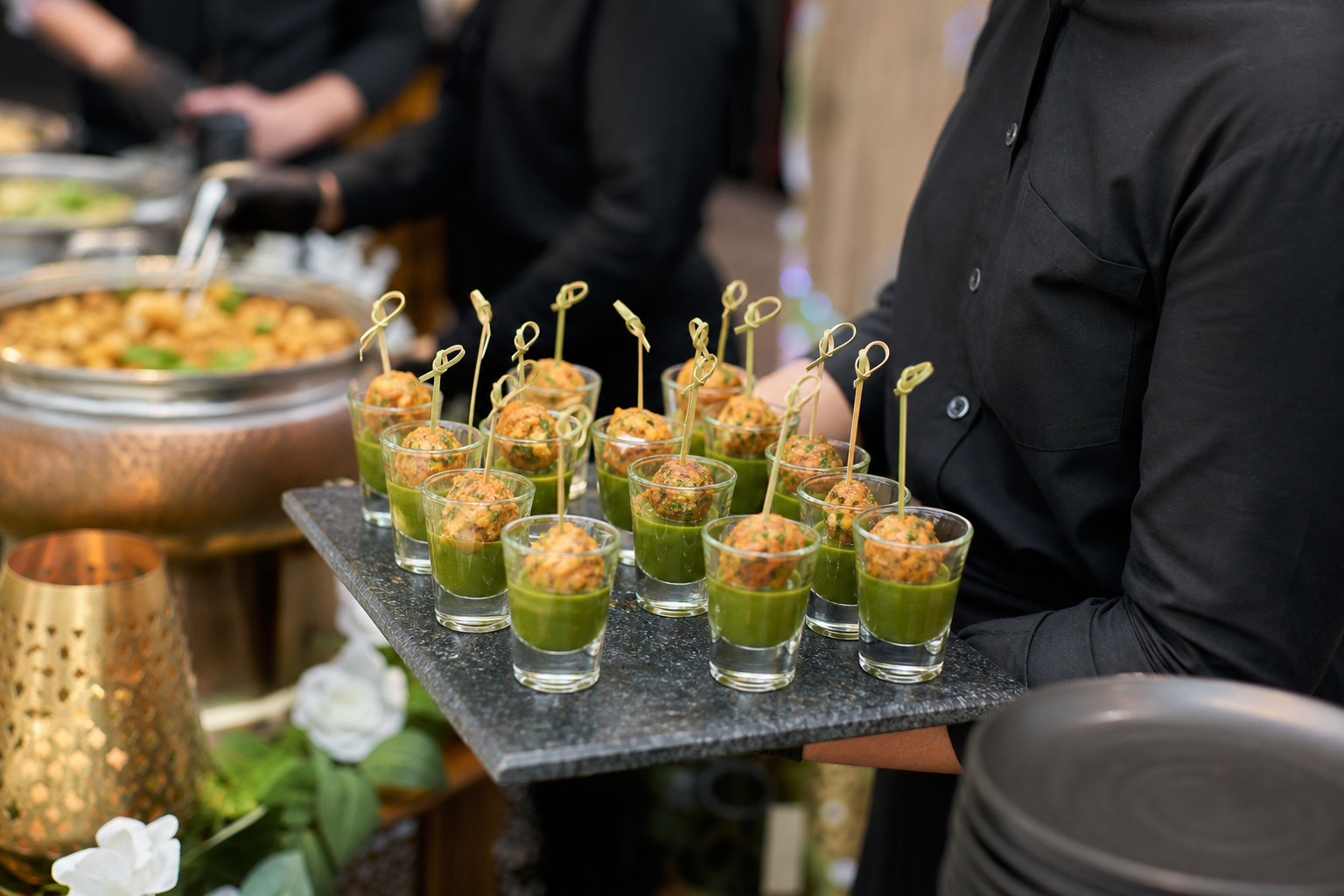
Indian and Indian-fusion events typically combine shareable starters with hot mains and rice dishes. Confirm portioning and service style for each category. Chaat and pani puri work best as passed items or a station to avoid sogginess, momos perform well as hot finger food, and biryani and sizzlers need reliable hot-holding and plated service. Review sample menus before you book; local providers publish location-specific menus so you can judge portion sizes and signature offerings (for example, see La Tikka's Hamilton and Kitchener menus: La Tikka Hamilton menu, La Tikka Kitchener menu).
Questions to ask about menu execution:
- For chaat stations and pani puri, will items be assembled on-site to preserve texture, and how many pieces per guest are recommended?
- For momos and Indo-Chinese plates, how will the caterer keep items hot and fresh during service?
- For sizzlers and tandoori mains, who handles on-site finishing, and does the venue permit the open serving method you prefer?
- If you want a vegetarian-first event, can the caterer design a primarily plant-based package that still satisfies omnivores?
Dietary restrictions, allergen handling and custom menus
Indian menus are rich in vegetarian options yet can be complex for allergen management. Ask the caterer to describe their cross-contact prevention practices, whether they label dishes with allergens, and whether they can prepare items in dedicated equipment or a separate area. Request written confirmation of substitutions and labelling for guests with severe allergies. Event-planning checklists recommend securing these commitments in writing and asking for explicit labelling and server briefing when allergies are present.
Suggested wording to request in writing: "Please provide a written list of allergens present per menu item, describe your cross-contact prevention procedures, and confirm that staff will be briefed on allergy responses before the event." For menu examples and to identify suitable vegetarian or vegan substitutions, review sample Indian-fusion menus published by local caterers.
Staffing, equipment and hot-holding requirements
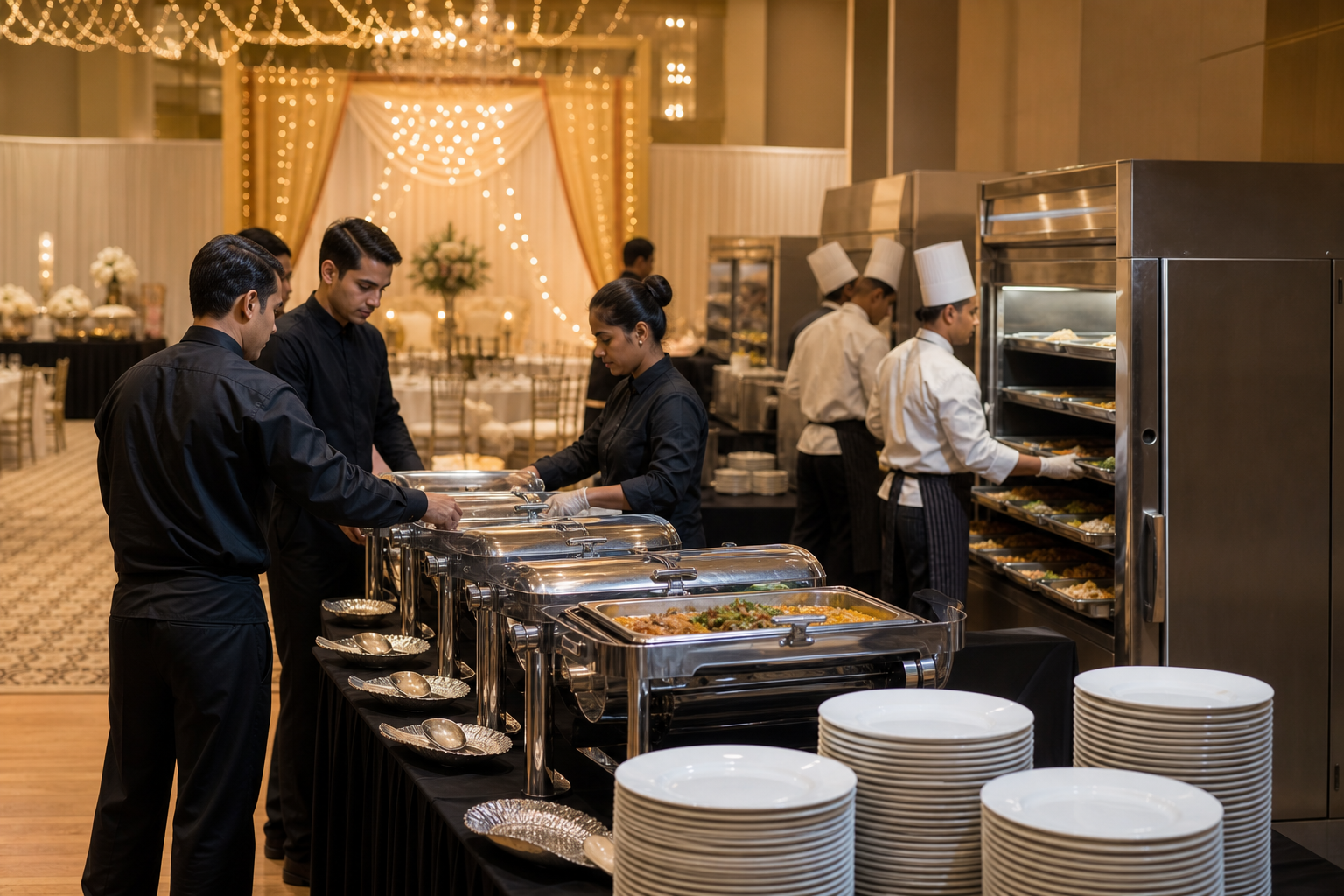
Reliable hot-holding is critical for biryani, sizzlers and Indo-Chinese hot plates. Confirm the exact equipment the caterer will supply and whether the venue can support it. Key items to verify include:
- Chafing dishes, fuel or electric hot-holding, and whether the caterer brings fuel or expects venue power.
- Number of servers and chefs provided, including on-site finishing staff for sizzlers or live stations.
- Power access, loading and unloading windows, and whether the caterer needs a prep area on-site.
- Waste removal, plate and utensil counts, and cleanup responsibilities.
Coordinate early with venue and caterer to avoid last-minute obstacles. Vendor requirement resources outline many of these practical constraints and what venues commonly ask of outside caterers (Hamilton vendor guidance).
Lead times, capacity and pricing transparency
Lead times vary by event size and complexity. Corporate lunches and small private gatherings typically need at least one to two weeks' notice, while larger events or custom menus require several weeks. Ask the caterer about minimum guest counts, deposit requirements, and how they handle late guest increases. Request a written quote showing per-person pricing, portion assumptions, fees for servers and equipment, delivery charges, taxes, and gratuity policy. Industry checklists advise demanding clarity on deposits and cancellation terms to avoid surprises.
If you prefer a local caterer that lists menus and contact options, check providers that publish sample menus and contact links so you can request an accurate written proposal quickly. For example, La Tikka publishes menus and accepts catering enquiries online (La Tikka Indian Fusion).
How to compare shortlisted caterers and common red flags
Use a simple scoring grid with weighted criteria. Example weights you can apply are: taste and menu fit 35%, safety and hygiene documentation 20%, reliability and references 15%, pricing and transparency 15%, and flexibility for dietary needs and last-minute changes 15%. Practical red flags include:
- No written contract or vague cancellation and refund terms.
- Refusal to show insurance or food-handler certificates.
- No tasting option for weddings or large social events where taste matters.
- Unclear portion assumptions or unwillingness to provide written per-person counts.
Ask for references and recent event examples. A reputable local caterer should provide references, direct you to online reviews, and answer questions about past events and capacity constraints.
Next steps: what to ask in your quote request and how to book a tasting
Use this short email template when requesting a quote or tasting:
Subject: Catering request for [event date] — [event type]

Hello [caterer name],

We have [guest count] guests for [event type] on [date] at [venue]. Please send a written quote including per-person pricing, portion sizes, what is included (delivery, staff, equipment), deposit and cancellation terms, and proof of insurance and food-handler certificates. Can you arrange a tasting on [two date options]? Please confirm whether you can accommodate [list dietary needs].

Thank you,
[Your name] | [phone] | [venue contact]
Attach venue vendor forms if required, and ask the caterer to return a sample contract and menu package. For a Hamilton provider that publishes menu PDFs and accepts catering enquiries, see the Hamilton menu and the contact section for direct booking: La Tikka Hamilton menu, La Tikka contact.
Frequently asked questions
Do I need a special permit for an outside caterer at a Hamilton venue?
Some venues require caterers to complete vendor forms, provide proof of insurance, and meet food-premise requirements. Check the venue's event rules and request the caterer provide any paperwork the venue asks for before you sign a contract. See Hamilton restaurant startup resources for examples of common vendor requirements (Hamilton resources).
How far in advance should I book Indian catering in Hamilton for 50 to 200 guests?
Contact caterers at least two to four weeks ahead for a 50 to 200 guest event, and allow more lead time for custom menus, tastings, or busy seasons. Larger or more complex events typically need additional lead time and deposit arrangements.
Can an Indian caterer in Hamilton accommodate strict vegetarian, vegan or nut-free menus?
Many Indian and Indian-fusion caterers offer extensive vegetarian and vegan options, but you should request written allergen procedures and labelling. Ask whether the caterer can prepare items in separate equipment or areas and provide labelled containers for guest safety.
What should be included in a written catering quote and contract?
A complete quote should show per-person pricing and portion assumptions, what is included (staff, equipment, set-up), delivery and removal fees, deposit and cancellation terms, insurance proof, sample menu, and an outline of services on the event day.
Do caterers provide servers and equipment or does the venue supply them?
Either arrangement is possible. Confirm whether the quote includes servers, chafing dishes, tableware, linens, and cleanup. If the venue supplies equipment, ensure the caterer knows what will be available and confirm compatibility for hot-holding and power needs.
If you are ready to request a quote, tasting, or a catering package for Hamilton, contact La Tikka Indian Fusion and view the Hamilton menu to start the conversation: La Tikka Indian Fusion.
Sources: La Tikka menus and service pages; Hamilton vendor guidance and restaurant startup resources; industry caterer comparison checklists and event planning advice.
Ready to request a quote or schedule a tasting from a local Hamilton Indian caterer?
Visit La Tikka's Hamilton menu and contact page to start the conversation: menu, contact?