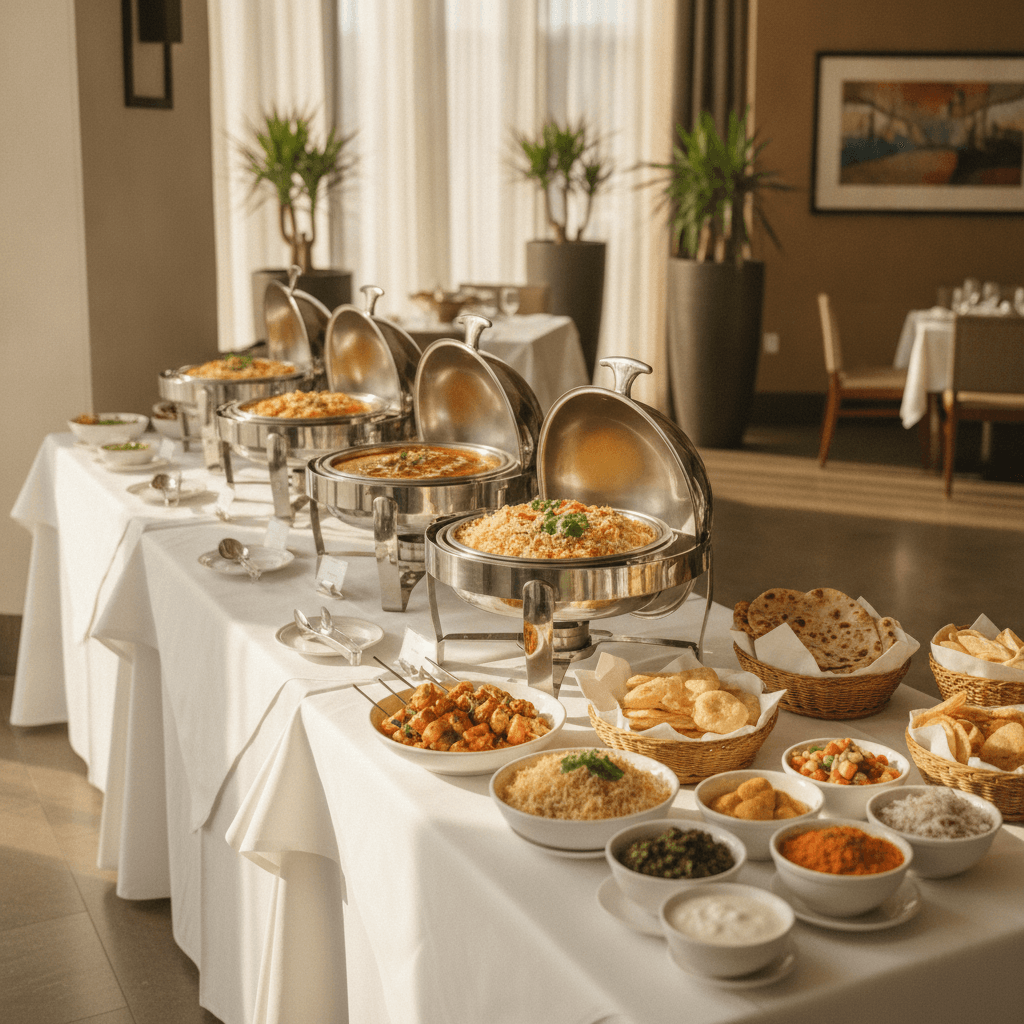
An Indian catering menu checklist is a structured planning tool that maps courses, portions, dietary needs, and service logistics for your event. It keeps food variety balanced, portions aligned to headcount, and service flowing on time. For Cherry Hill gatherings, it ensures chaat, tandoori, Indo-Chinese, and desserts land perfectly with staff, rentals, and timing locked in.
By Deep Soni • Last updated: July 5, 2026
Overview: your plan at a glance
Use this Indian catering menu checklist to align headcount, courses, dietary needs, and service style. Confirm portions per guest, lock prep and delivery timelines, and label allergens. In Cherry Hill, factor travel time, venue constraints, and guest mix to balance chaat starters, mains, sides, and desserts without waste.
Here’s how this complete guide helps you plan faster and with confidence.
- Define what an Indian catering menu checklist includes and why it matters.
- Follow a step-by-step process from headcount to day-of execution.
- Compare buffet, stations, family-style, and plated service styles.
- Build balanced courses: chaat, momos, tandoori, Hakka, curries, biryani, sides, desserts.
- Plan dietary accommodations, allergen labeling, and cross-contact safeguards.
- Organize equipment, staffing, and delivery windows specific to Cherry Hill venues.
- Templates, planning ratios, and real examples from La Tikka Indian Fusion’s events team.
- Mid-article checklist you can copy into your planning doc.
- Answers to common questions in a concise FAQ section.
What is an Indian catering menu checklist?
An Indian catering menu checklist is a master list that outlines courses, dish counts, portions, dietary tags, service style, equipment, and timelines. It’s the single source of truth your caterer and organizer reference to prevent over-ordering, missed dietary needs, and day-of delays.
Think of it as your event’s control panel. It ties headcount to courses, assigns portions, and sets accountability for prep, delivery, and service windows.
- Scope your event: occasion, date, venue, start/end times, on-site kitchen access.
- Headcount + segments: adults, kids, vegetarians/vegans, dietary restrictions.
- Course plan: appetizers, mains, sides, breads, rice, desserts, beverages.
- Service style: buffet, stations, family-style, or plated.
- Portion ratios: per-guest targets for each category to reduce waste.
- Dietary tags: vegetarian, vegan, gluten-free, nut-free, dairy-free, halal-friendly.
- Equipment + staff: chafers, fuel, serving utensils, sneeze guards, servers, runners.
- Logistics: load-in path, parking, elevator use, table layout, power needs.
- Timeline: final menu lock, counts, delivery window, service start, breakdown.
In our experience supporting Kitchener and Hamilton events, a written, shared checklist reduces last‑minute decisions and keeps food hot, labeled, and on schedule.
Why this checklist matters in Cherry Hill
A documented checklist prevents shortages, protects guests with clear allergen labels, and keeps courses moving. In Cherry Hill, venue access, traffic patterns, and mixed guest preferences make advance planning essential for balanced variety and smooth service.
Cherry Hill hosts a mix of office lunches, family celebrations, and cultural events. A tailored plan ensures broad appeal—street-style starters, familiar North Indian mains, and Indo-Chinese crowd-pleasers—while honoring dietary needs.
- Balanced variety: pair bright, crunchy chaat with hearty curries and tandoori platters.
- Guest-centric portions: right-sizing avoids running out or packing excessive leftovers.
- Operational flow: smart table layout and staffing reduce bottlenecks at peak times.
- Food safety: hot foods held above safe temperatures, cold items kept chilled.
- Allergen clarity: tags and separation protect those with sensitivities.
Local considerations for Cherry Hill
- Leverage nearby Victoria Park timing: if guests stroll pre-ceremony or between photos, plan a cold chaat station that withstands brief service pauses.
- Heritage-site load-in: older buildings like the Schneider Haus National Historic Site may have tighter loading paths—confirm tray sizes, cart access, and staging tables.
- Seasonal swings: in winter, add 10–15 minutes to delivery windows for road conditions; in summer, protect yogurt- and herb-based chaats with extra chilling.
Your Indian catering menu checklist: the essentials
Start with headcount and dietary needs, choose a service style, then map courses with per-guest portions. Confirm equipment, label allergens, and lock delivery and service times. Use the following step-by-step list as your working Indian catering menu checklist.
Copy this into your planning document and adapt it to your venue and guest mix.
- Define the event: purpose, date, venue, service windows, on-site kitchen access.
- Confirm headcount: adults, kids, vegetarians/vegans; gather restrictions early.
- Select service style: buffet, stations, family-style, or plated (see comparison below).
- Choose appetizers: 2–3 bites per guest; include at least one vegetarian chaat.
- Choose mains: 2 curries (mix of vegetarian and meat), 1–2 tandoori items.
- Pick starches: naan/roti (≈1.5 pieces/guest), basmati rice (≈1–1.5 cups/guest).
- Add sides: raita or salad; chutneys (tamarind, mint-cilantro), pickles.
- Plan desserts: 1 item for lunch, 1–2 for dinner; include a no‑nut option.
- Plan beverages: water, sodas, and a signature mocktail pairing well with spice.
- Dietary labeling: vegetarian, vegan, gluten-free, dairy-free, nut-free, halal-friendly.
- Portion targets: 6–8 oz curry/guest; 4–6 oz tandoori/guest; 2–3 appetizers/guest.
- Equipment list: chafers, fuel, serving utensils, sneeze guards, heat-proof gloves.
- Staffing: servers for refills, line flow, and allergen questions; runner per 40–50 guests.
- Table layout: proteins centered, carbs at the end to avoid early fill-up.
- Timeline: lock menu 10–14 days out; confirm counts 5 days out; reconfirm 24–48 hours out.
- Delivery + load-in: reserve parking; confirm elevator/door widths and path to buffet.
- Food safety: hot items above 140°F; cold chaats and raita below 40°F during service.
- Allergen controls: separate utensils; display tags; brief staff on cross-contact.
- Post‑event plan: compostables, leftovers handling, tray pickup, and final walkthrough.
Need a second set of eyes? Our Cherry Hill team at La Tikka Indian Fusion reviews checklists daily. Share your headcount, venue notes, and course ideas, and we’ll suggest a balanced spread that flows—without over-ordering.
Service styles compared: buffet, stations, family-style, plated
Match service style to guest count, venue space, and timeline. Buffets move volume efficiently, stations boost variety and engagement, family-style suits seated groups, and plated offers the most control. The table below summarizes when each shines.
The right style keeps lines short, temperatures safe, and portions consistent. Here’s a quick comparison.
| Service Style | Best For | Pros | Watchouts |
|---|---|---|---|
| Buffet | 50–250 guests, tight timelines | Fast throughput; simple staffing; easy refills | Line bottlenecks; needs clear labeling and sneeze guards |
| Action Stations | Interactive events, mixed diets | Customization; spreads traffic; great for chaat/momo | More equipment; staffing at each station |
| Family-Style | Seated meals, community feel | Shared platters; warm, social vibe | Table space limits; portion control varies |
| Plated | Formal programs, tight agendas | Precise portions; easiest for speeches | More back-of-house coordination; limited variety per plate |
For interactive receptions, a chaat station plus a main-course buffet balances excitement with efficiency. For seated family celebrations, family-style naan baskets and curries keep conversation flowing.
Core menu categories to include (with La Tikka examples)
Build range and contrast: bright chaats, smoky tandoori, comforting curries, and a signature Indo-Chinese dish. Add breads and rice for balance, then finish with familiar desserts. Use the examples below to shape your Indian catering menu checklist.
These crowd-pleasers reflect La Tikka’s real menu in Kitchener and Hamilton—adaptable to Cherry Hill events.
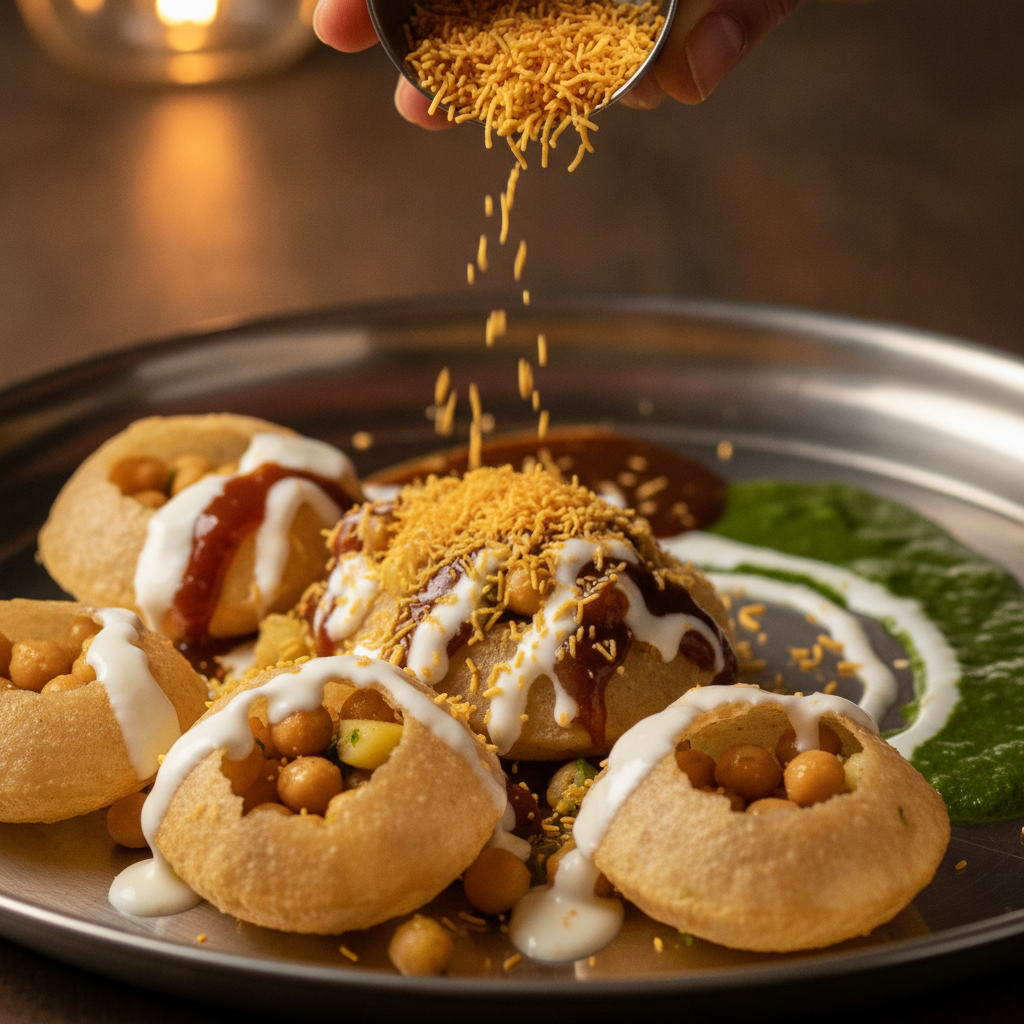
Starters: chaat and momos
- Chaat trio: samosa chaat, pani puri, aloo tikki chaat for sweet‑tangy‑crunchy contrast.
- Momos two ways: steamed and tossed (e.g., chili momo) to satisfy heat seekers and purists.
- Guideline: set 2–3 starter bites per guest to prime appetites without overfilling.
- Explore a practical samosa chaat guide for topping ideas and texture balance.
Tandoori specialties and sizzlers
- Paneer shashlik sizzler: a vegetarian hero with peppers and onions for aroma and color.
- Chicken tikka or tandoori: smoky protein that anchors the buffet.
- Grilling note: hold above 140°F in covered chafers; rotate trays every 20–30 minutes.
Curries and Indo-Chinese mains
- North Indian mains: butter chicken, dal makhani, palak paneer for creamy vs. earthy variety.
- Indo-Chinese feature: Hakka noodles or Manchurian for a savory, crowd‑friendly twist.
- Pairing tip: one creamy curry + one tomato/onion‑forward curry keeps plates lively.
Rice, breads, and sides
- Rice: basmati or biryani; plan 1–1.5 cups cooked per guest.
- Breads: tandoori naan or roti; ≈1.5 pieces per guest keeps lines moving.
- Sides: raita, kachumber salad, and chutneys (mint-cilantro, tamarind).
Desserts and beverages
- Desserts: consider a creamy option and a syrup‑based sweet for textural contrast.
- Beverages: pair spice‑friendly mocktails with still/sparkling water and sodas.
- See this Indian desserts guide for inspiration on balancing rich and light endings.
Dietary and allergen planning
Collect restrictions with RSVPs, tag every tray clearly, and separate utensils for major allergens. Offer at least one vegan, gluten‑free, and nut‑free option among starters and mains. Brief staff to answer questions and guide guests confidently.
Guest trust rises when labels are visible and staff are prepared. Build redundancy into your plan.
- RSVP data collection: add checkboxes for vegetarian, vegan, gluten‑free, dairy‑free, nut‑free, halal-friendly.
- Labeling standard: dish name + dietary tags on tent cards; use color coding if venue lighting is dim.
- Separation: dedicated utensils and distinct tray placement for allergen‑heavy items.
- Vegan base: at least one vegan curry (e.g., chana masala) and a gluten‑free starch (plain basmati).
- Cross‑contact briefing: rehearse staff responses; swap contaminated utensils immediately.
- Emergency plan: designate a point person for allergen questions and incident response.
We’ve found that labeling 100% of trays and having a staffer float near the buffet for questions keeps lines moving and reduces uncertainty for guests with restrictions.
Logistics, equipment, and staffing
Lock delivery windows, confirm load‑in paths, and stage the buffet with heat retention in mind. Staff for flow—one runner per 40–50 guests keeps refills steady. Keep hot foods above 140°F and cold items below 40°F during service.
Your plan should fit the venue as much as the menu. Walk the path from door to table.
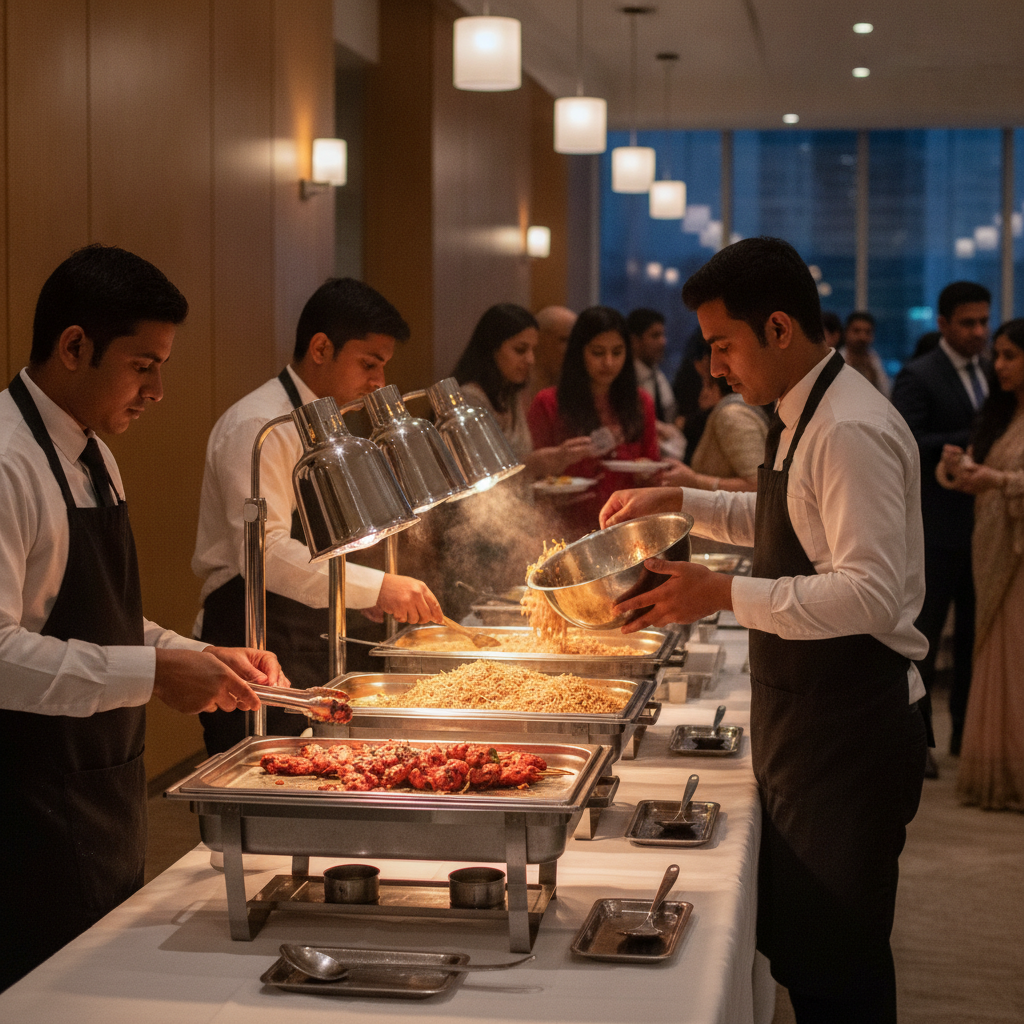
- Timeline anchors: confirm delivery 60–90 minutes pre‑service; build buffer for parking and elevators.
- Heat plan: chafers with enough fuel for full service; lids on between refills.
- Cold chain: chill raita and yogurt‑based chaats in deep pans; swap pans in 30‑minute intervals in summer.
- Table flow: start with plates and protein, then curries, then starches and chutneys; desserts separate.
- Serving tools: full‑size spoons for rice; portioned ladles for curries to standardize servings.
- Staff ratios: 1 server per 35–50 guests for buffet; 1 station attendant per action station.
- End‑of‑service: plan for compostables and tray pickup; designate a liaison for closeout.
For Cherry Hill venues with narrow doors, use half pans for heavier curries—easier to carry, quicker to swap, and safer for staff.
Tools and resources (templates and inspiration)
Use a shared checklist template, a portions calculator, and a labeled table diagram. For inspiration, browse dessert pairings and wedding menu ideas, then adapt them to your headcount and dietary needs.
Practical resources can jumpstart planning and get everyone aligned.
- Checklist template: headcount, course plan, portions, dietary tags, equipment, staffing, and timeline.
- Portion calculator: plug in guest count to estimate appetizers, curries, tandoori, breads, rice, desserts.
- Table diagram: sketch station order and signage placement for clean flow.
- Dessert inspiration: explore an Indian desserts guide to round out rich mains with lighter finishes.
- Wedding menus: scan South Asian wedding menu ideas and translate them to your venue scale.
- Chaat toppings: see this samosa chaat guide for textures and sauces guests love.
Keep your template in a shared folder so your venue contact, caterer, and emcee can all see the same playbook.
Case studies and examples from La Tikka
Tailor variety to your crowd. For office lunches, emphasize handhelds and quick service. For family celebrations, add aromatic sizzlers and comforting mains. The examples below show how we adapt menus and flow in and around Cherry Hill.
Real scenarios help you visualize pacing, portions, and guest experience.
Office lunch near Victoria Park
- Goal: 60‑minute service window for 40 guests before afternoon meetings.
- Menu: chaat trio starters; butter chicken + palak paneer; basmati; naan; Hakka noodles; gulab jamun.
- Flow: single buffet line with proteins first; plates at the front; beverages at the end to reduce juggling.
- Tip: portioned ladles for curries minimize delays and keep servings consistent.
Family celebration near Schneider Haus National Historic Site
- Goal: time for speeches and photos; warm, communal feel.
- Menu: paneer shashlik sizzler; chicken tikka; dal makhani; biryani; raita; naan; assorted mithai.
- Flow: family‑style breads and rice to tables; buffet for proteins and curries to control refills.
- Tip: seat dessert bar away from the exit to avoid early crowding.
Community mixer with action stations
- Goal: networking across departments; interactive food experience.
- Menu: chaat station, momo station, main-course buffet with two curries and tandoori skewers.
- Flow: stations on opposite sides to split lines; roaming attendant answers allergen questions.
- Tip: print small “mild/medium/spicy” icons on tent cards for quick guidance.
Frequently Asked Questions
Plan portions by guest count, mix vegetarian and meat mains, and label allergens clearly. Choose buffet for speed, stations for engagement, family-style for seated intimacy, and plated for formal agendas. Lock timelines and staffing to keep service smooth.
How many appetizers should I plan per person?
Plan 2–3 appetizer bites per guest for a reception, or 1–2 if a full buffet follows shortly. Include at least one vegetarian chaat and one protein option so everyone has a quick, satisfying start.
What service style works best for mixed diets?
Action stations and buffets handle mixed diets well. Stations let guests customize chaats and momos, while a main-course buffet offers labeled vegetarian, vegan, and gluten-free items alongside proteins.
How far in advance should I finalize my menu?
Aim to lock your menu 10–14 days before the event, confirm headcount 5 days out, and reconfirm logistics 24–48 hours prior. This cadence protects supply, staffing, and labeling accuracy.
How do I handle allergens at a self-serve buffet?
Use clear tent cards with dietary tags, keep separate utensils for allergen-heavy items, and brief a staffer to answer questions. Place nut-forward desserts on a distinct table to minimize cross-contact.
Key takeaways
Balance variety and flow. Use portions per guest, clear allergen tags, and a service style that fits your venue. Lock timelines, staffing, and load‑in details early so the food you planned is the food guests enjoy—hot, fresh, and on time.
- Start with headcount and dietary mix, then layer in service style and courses.
- Use standard portions to avoid running out and to keep lines moving.
- Label every tray and brief staff on common allergen questions.
- Stage tables for flow, not just aesthetics—proteins first, starches last.
- Confirm logistics and staffing early; build buffers for Cherry Hill traffic and access.
Conclusion and next steps
Your Indian catering menu checklist aligns people, portions, and pacing. Build it once, share it widely, and adjust as your event takes shape. If you want help tailoring chaat, tandoori, Indo-Chinese, and desserts for Cherry Hill, our team is ready to collaborate.
Copy the step-by-step list above into your plan, sketch your table layout, and tag every dish. When you’re ready, share your draft with our team so we can suggest portion tweaks, flow adjustments, and a dessert pairing that sends guests home smiling.