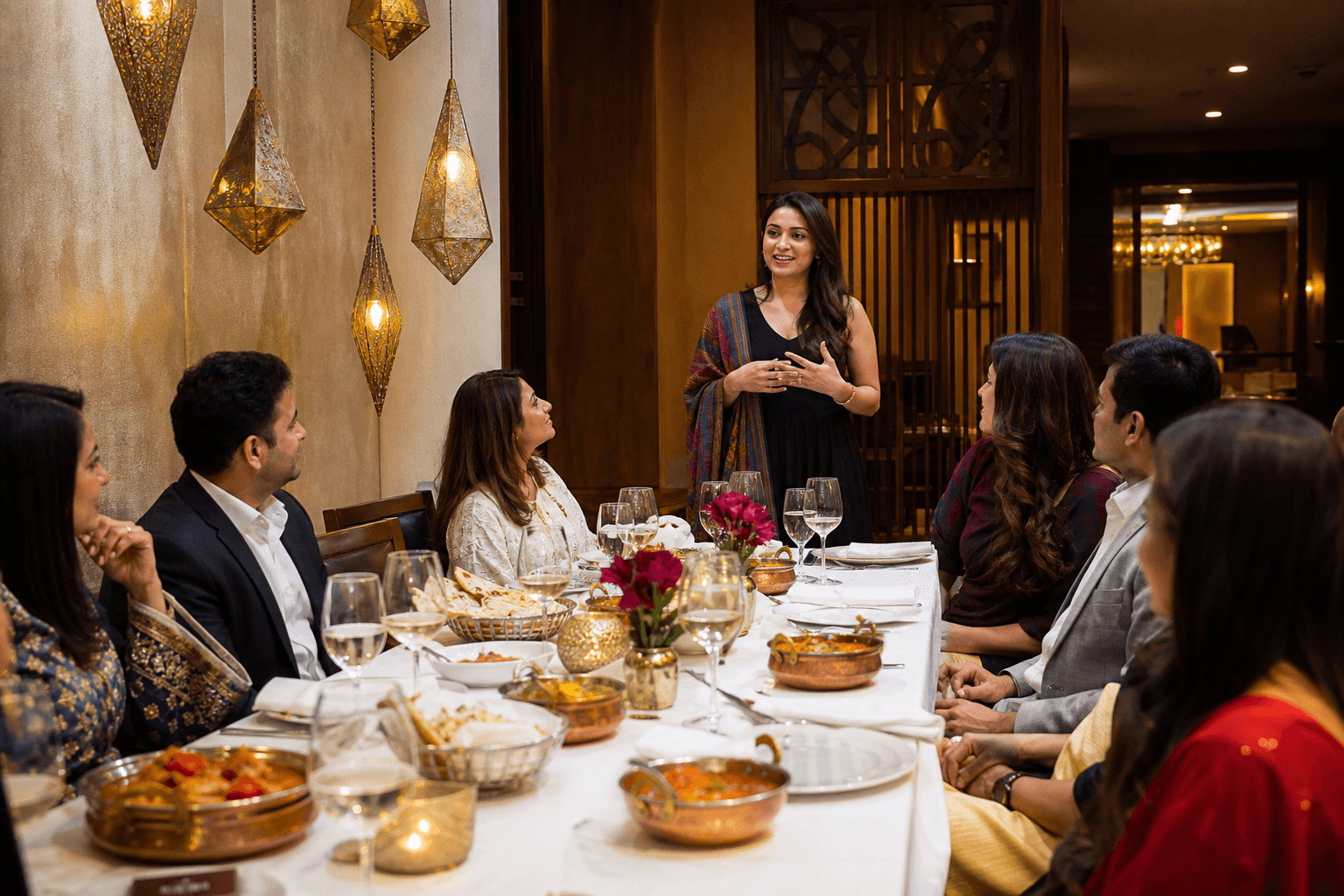
A successful private dining booking starts with more than choosing a date and estimating the number of guests. Before you commit, confirm whether you are booking a private room, a semi-private area, a regular group reservation, or catering. Then clarify the menu, costs, service arrangements, and responsibilities.
This private dining checklist is designed for celebrations, meetings, family gatherings, student events, and group meals in Kitchener, Hamilton, and beyond. Use it when comparing restaurants, speaking with an event coordinator, or preparing a written booking brief.
1. Confirm what kind of event space you are booking
“Private dining” can describe several arrangements. A private room may be separated from the rest of the restaurant, while a semi-private area may have partial separation but remain part of the main dining room. A regular group reservation usually reserves tables without giving your group exclusive use. Catering may take place at a venue that is not the restaurant itself.
Ask the restaurant to describe the exact arrangement rather than relying on the label. Confirm whether other guests will share the room, whether your group has exclusive use, how noise and speeches will be handled, and whether the booking includes a particular area or simply a table reservation.
- Is the space private, semi-private, or part of the regular dining room?
- Will another group use the same area?
- Is the booking for a specific space, or will the location be assigned later?
- Can the arrangement support a meal, presentation, celebration, or networking event?
When comparing venues, look for clear descriptions of private events, group bookings, minimum spends, final headcounts, and signed terms. For an example of the type of information restaurants may publish, see private event details, but confirm every term directly with the venue you are considering.
2. Confirm the date, timing, and booking window

Availability is only one part of scheduling. A restaurant may accommodate your group at a certain time but not offer enough time for setup, speeches, dessert, or a relaxed meal. Provide the preferred date, an acceptable alternative, arrival time, meal start time, and expected departure time.
Ask when guests may arrive, whether the restaurant needs time to prepare the room, and whether decorations or other setup must happen during your booked period. If you are planning a celebration or meeting, confirm whether the meal must finish by a specific time. Also ask when the restaurant needs final confirmation, the final headcount, menu selections, and payment.
Do not assume that a reservation time includes early access or extended use. Have the agreed arrival, dining, setup, and departure times included in the written confirmation.
3. Confirm the guest count and seating plan
Start with an estimated headcount, but explain how much it may change. The restaurant needs to know whether the group includes children, guests who require accessible seating, a speaker, a host table, or people who may arrive at different times.
Ask how tables will be arranged and whether the proposed layout supports conversation. A long single table may suit a family meal, while smaller tables can work better for networking. If presentations or speeches matter, confirm where guests will stand, whether everyone can see them, and how service will continue during that part of the event.
- The estimated and final guest-count deadlines.
- Whether children, infants, or guests with mobility needs affect the arrangement.
- How late additions or cancellations will be handled.
- Whether the restaurant will provide one shared table, several tables, or another layout.
Request a written summary of the agreed seating plan. Do not assume the restaurant can provide a particular capacity or configuration until it confirms it for your date and location.
4. Match the menu to the group
The right menu should suit the event format, guest preferences, budget, and pace of service. Ask whether the restaurant recommends individual ordering, a set menu, family-style service, a buffet, or catered trays. Individual ordering offers flexibility, while a set menu can make timing and budgeting easier.
Dietary planning should happen before the booking is finalized. Identify vegetarian, vegan, halal, allergy-related, gluten-sensitive, or other requirements and ask how the kitchen handles them. Request clarification about shared preparation areas, ingredient substitutions, and cross-contact procedures where relevant. Never treat a menu description alone as a guarantee for a serious allergy.
La Tikka Indian Fusion provides a useful example of why menu breadth should be discussed early. Its verified offerings include Chaat, Indo-Chinese dishes, Momos, Tandoori specialties, Sizzlers, North Indian mains, biryani, thali, beverages, and desserts. That range may help a mixed group find suitable choices, but availability, preparation, and event menus still need to be confirmed for the specific location and date.
Ask whether the quoted menu includes beverages, desserts, shared starters, bread, rice, service, or other extras. If guests will order individually, find out whether separate bills are possible and how the restaurant will manage a large number of orders.
5. Clarify the budget and booking terms
Restaurant event pricing can involve more than the listed food price. Ask for the expected per-person cost or minimum spend, then confirm whether taxes, gratuity, service charges, beverages, room fees, and other extras are included or added separately.
Also ask about the deposit, when it is due, whether it is refundable, and how cancellation or date changes work. Confirm the payment schedule, accepted payment methods, final headcount rules, and what happens if the group spends less or more than expected.
A useful written quote should identify:
- Food and beverage selections, including permitted substitutions.
- Any minimum spend, room fee, deposit, tax, gratuity, or service charge.
- The deadline for confirming the final headcount and menu.
- Cancellation, postponement, late-arrival, and no-show policies.
- Who is responsible for payment and whether one bill or separate bills are available.
Do not fill gaps with assumptions. If the restaurant has not supplied a minimum spend, deposit amount, package price, or cancellation policy, treat it as an open question rather than an implied term.
6. Confirm service and event logistics
Even a well-planned menu can become difficult if the service details are unclear. Ask whether food will arrive all at once, in courses, family-style, or as guests order. Confirm who your main contact will be on the day and how staff will handle late arrivals, speeches, cake service, or changes during the meal.
Discuss decorations, outside food, cake cutting, music, gifts, signage, and presentation equipment before bringing anything to the restaurant. Ask about access instructions and practical information your guests may need. Parking, transit, entrance access, and accessibility should be confirmed directly with the location rather than assumed from a general online listing.
Put the final arrangements into one email or booking document. It should include the date, arrival time, guest count, menu, payment terms, seating expectations, outside-item rules, event contact, and special instructions. A clear written record reduces confusion between the person who made the booking and the staff serving the group.
7. Check alcohol arrangements and Ontario requirements
Ask whether alcohol will be supplied by the restaurant, purchased by guests, included in a package, or brought in from outside. These arrangements can affect pricing, service responsibilities, permitted beverages, and whether a liquor permit needs to be considered.
Do not assume that every private dinner requires a permit, or that the restaurant will manage one for you. Explain the event format and alcohol plan to the venue, then confirm who is responsible for any application, compliance step, service restriction, or deadline.
Ontario Regulation 747/21 states that an application for a permit must be submitted at least 10 days before certain private events involving liquor permits. The rule depends on the event circumstances, so review the regulation and confirm the requirements that apply to your event.
- Is the event considered private, and who defines that arrangement?
- Can guests bring alcohol, or must beverages be purchased through the restaurant?
- Who handles any required permit or notice?
- Are there limits on service times, beverage types, or outside alcohol?
- Will alcohol costs be included in the quote or charged separately?
Private dining booking questions at a glance
| Question to ask | Why it matters | What to confirm in writing |
|---|---|---|
| Is the space private, semi-private, or a regular group area? | It prevents a mismatch between expectations and the actual booking. | Space type, exclusivity, and location within the restaurant. |
| What are the setup, arrival, dining, and departure times? | It protects the schedule for meals, speeches, and activities. | Access times and the expected end of service. |
| What guest count is required, and when is it final? | Headcount affects seating, food quantities, and cost. | Estimated count, final deadline, and change policy. |
| How will food and beverages be served? | Service style affects pace, flexibility, and guest experience. | Menu format, courses, ordering, substitutions, and beverages. |
| What is the complete cost? | Extra charges can change the event budget. | Food, drinks, taxes, gratuity, fees, deposit, and payment dates. |
| Who handles logistics and alcohol questions? | A named contact makes decisions easier before and during the event. | Contact person, responsibilities, and permit-related action. |
Using this checklist when comparing Kitchener and Hamilton options
Local comparison is easier when you send every restaurant the same brief. Include the preferred location, date and time, estimated headcount, event type, menu preferences, dietary needs, alcohol plan, and seating or presentation requirements. Then compare the answers rather than comparing headlines or assumptions.
La Tikka Indian Fusion serves Kitchener and Hamilton and offers reservations, catering, events, and a broad Indian fusion menu. The Hamilton location also has bar and late-night dining positioning. These differences may matter to your group, but confirm location-specific availability, hours, menu options, event arrangements, and pricing before deciding.
Private dining checklist FAQ
What is the difference between private dining, semi-private dining, and a group reservation?
Private dining generally means your group has exclusive use of a designated room or area. Semi-private dining offers some separation but may share the wider space with other guests. A group reservation usually reserves tables without exclusive use. Ask the restaurant to describe the actual setup and confirm it in writing.
Should I choose restaurant private dining or catering?
Choose private dining when your group values a restaurant setting, table service, and a meal managed on-site. Catering may be more suitable when you already have a venue, need food delivered, or want greater control over the event location. Compare food service, setup, staffing, equipment, cleanup, and alcohol responsibilities before deciding.
How early should I contact a restaurant for a private dining booking?
Contact restaurants as soon as you know the approximate date, guest count, and event format. Earlier planning gives you more opportunity to compare spaces and menus. Ask when the venue needs the deposit, final headcount, and menu confirmation.
What should I ask about dietary restrictions?
Share dietary needs before selecting the menu and ask about ingredients, substitutions, preparation methods, and cross-contact procedures. Request that agreed accommodations be included in the event notes. For severe allergies, speak directly with the restaurant and follow its guidance rather than relying only on menu labels.
Do private events in Ontario always require a liquor permit?
No single answer applies to every event. Requirements depend on the event structure, how alcohol is supplied, and other circumstances. Ask the restaurant and review the applicable Ontario rules early. Certain private events involving liquor permits have a 10-day application timeline, so do not leave the question until the week of the event.
Conclusion: Turn your checklist into a clear booking brief
The strongest private dining decision comes from matching the event to the right format, not from choosing a venue based on the word “private” alone. Confirm the space type, schedule, guest count, menu, full cost, service plan, and alcohol responsibilities before committing.
For a Kitchener or Hamilton event, prepare one concise brief and send the same questions to each restaurant you are considering. If you are exploring Indian fusion, group dining, or catering, contact La Tikka Indian Fusion with your preferred location, date, guest count, menu preferences, and event requirements so the arrangements can be confirmed directly.