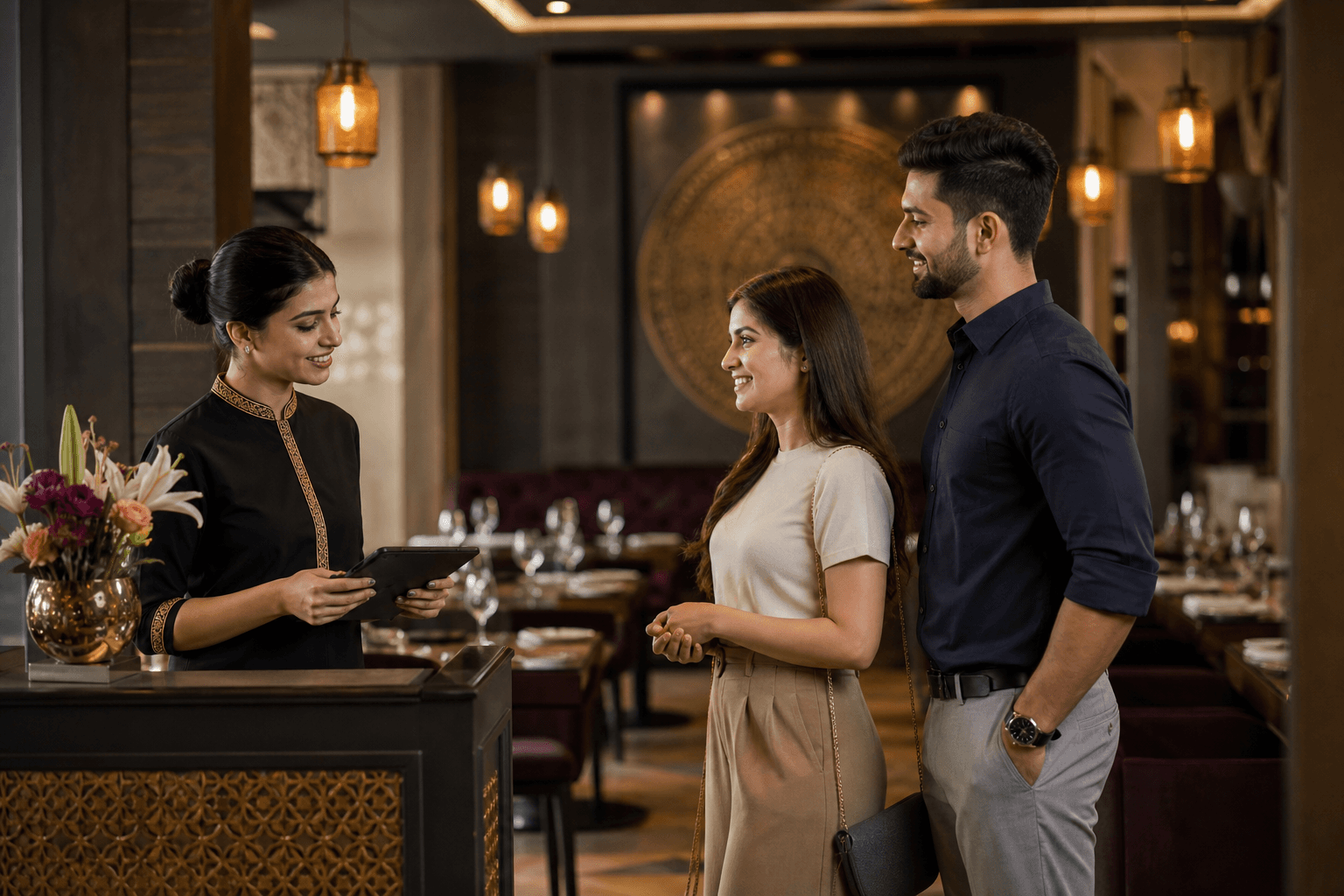
Restaurant reservation etiquette is the practical set of actions and expectations that help guests and restaurants use booked tables efficiently, reduce disruptions, and create a fair experience for everyone. Good etiquette covers how you book, what you tell the host, how and when to arrive, how to cancel or change plans, and what to do if you run late. Industry guides recommend publishing clear policies and communicating them in reservation confirmations so both guests and staff know what to expect and can act accordingly (Reservation Policies: A Simple 8-Step Guide for Restaurants, Restaurant Reservation Etiquette).
What restaurant reservation etiquette means
In one sentence: restaurant reservation etiquette is the common-sense rules guests follow when they reserve and use a table so restaurants can manage seating, service, and other diners’ expectations. This includes being honest about party size and special needs when booking, arriving on time, cancelling courteously when plans change, and communicating clearly if someone will be late.
Restaurants benefit from clear reservation policies because they reduce no-shows and speed table turns. Practical policy steps include stating cancellation windows, whether deposits apply for large parties, and what to do when a booking is changed. Publishing those rules on reservation pages and in confirmation messages makes them enforceable and fair for guests and staff alike (Reservation Policies: A Simple 8-Step Guide for Restaurants).
Why it matters for local diners: following restaurant reservation etiquette helps protect your booking, improves service speed, and supports local restaurants’ ability to plan kitchen and front-of-house staffing. It also preserves the experience for other diners during peak times.
Dos and don'ts when you book
Dos
- Give accurate party size, including children and infants, and mention any high chairs or accessibility needs.
- State seating preferences clearly (window, booth, quieter area) when you call or in the notes field online.
- Ask about dietary restrictions, group menus, or set menus for events at the time of booking.
- Confirm the reservation method and contact details so the restaurant can reach you if plans change.
- Keep a screenshot or confirmation number handy in case you need to change or cancel.
Don'ts
- Do not overbook a table by promising more guests than will attend. Restaurants set seats and food prep to the number you give.
- Do not assume a last-minute walk-in will get the same priority as an existing reservation during peak hours.
- Avoid vague messages like "maybe five people"; give a best estimate and update the restaurant as soon as you know more.
These booking behaviours are standard etiquette and help hosts seat guests fairly and efficiently. For detail on what to include in a reservation policy, see the industry guidance on reservation policies and etiquette (Restaurant Reservation Etiquette).
How to arrive, when to expect seating and how to handle lateness

Arrive on time when possible. Most restaurants hold a reservation for a short grace period, commonly 10 to 15 minutes for small parties, after which hosts may reassign the table if there is demand. If you expect to arrive significantly later, call the restaurant immediately to let them know. The host can decide whether to hold the table, shorten service, or reschedule.
If your party wants to split into two groups or add last-minute guests, inform the host as early as possible. Splitting a bill or changing seating at the door may not be possible during busy periods and can slow service for both your group and others.
When you call to say you are running late, provide an estimated arrival time rather than vague phrases. That helps the host manage seating and avoid a no-show. If you cannot make the reservation, cancelling promptly frees the table for other guests and is the courteous option.
Cancelling, changing and no-shows: reasonable expectations
Cancelling in good time is a core part of reservation etiquette. Industry best practice recommends a clear cancellation window so guests know the consequences and restaurants can manage seating. A common approach is to offer a full refund for cancellations more than 24 hours before a reservation, and to retain a deposit or charge a fee for late cancellations or no-shows on larger bookings or peak times. Publishing this policy on reservation pages and confirmation emails keeps expectations transparent for everyone (Best Practices for Managing Reservations and Waitlists for Your Restaurant in Canada).
For large parties and busy time slots, many Canadian restaurants use small deposits to reduce no-shows. Best-practice guidance suggests targeting deposits for groups (for example, parties of six or more) and peak Friday or Saturday dinner windows, with amounts set to deter casual no-shows but not to scare away guests. Keep deposits reasonable relative to the expected cheque and state refund conditions clearly at booking (see guidance for Canada).
Note: deposit amounts, cancellation fees, and exact deadlines vary by restaurant. Unless published by the restaurant, assume deposits are only possible when explicitly stated on the reservation page or confirmation.
Large parties, events and catering: practical decision criteria

If you are organising a group or event, decide whether to reserve regular seating, request a private space, or book catering. Use these decision criteria:
- Size and flow: For small celebrations under six people, a standard reservation is usually fine. For larger groups, ask about private seating, set menus, or a dedicated server to keep timing predictable.
- Menu control: If timing and dietary consistency matter, request a set menu or pre-order options so the kitchen can deliver service on schedule.
- Deposit and cancellation rules: Expect the restaurant to ask for a deposit or credit-card guarantee for big groups, especially in peak slots. The industry recommends deposits be reasonable, with clear refund conditions listed at booking (see Canada best practices).
- Catering alternative: If you need guaranteed timing or service for a very large group, consider off-site catering instead of on-premise seating. La Tikka offers catering alongside dine-in service; consult the restaurant to compare options.
These steps help you set accurate expectations with the restaurant and avoid last-minute complications.
How to reserve and cancel at La Tikka (Kitchener and Hamilton)
La Tikka Indian Fusion operates two Ontario locations and offers dine-in, takeout, reservations and catering. The Kitchener location is a neighbourhood spot good for families and daytime dining. The Hamilton location includes a bar program and late-night hours suited to nightlife and late dinners. Both locations publish menus and contact information on the official site.
Practical steps to reserve or cancel at La Tikka:
- Choose the right location: pick Kitchener for family-style daytime dining and Hamilton when you want bar service or late-night seating. Menu differences and hours are available on the site menus for each location.
- Use the contact options on La Tikka’s site or call the Kitchener number at (519) 954-5144 for bookings and general reservations; use the Hamilton contact details listed on the site for Hamilton reservations and catering enquiries.
- Include party size, any children, accessibility needs and if you plan to celebrate or require a set menu at the time of booking.
- If your plans change, notify La Tikka as soon as possible through the same channel you used to book so the host can reassign the table.
Find menus and location contact information here: La Tikka homepage, the Kitchener menu, and the Hamilton menu. These resources help you pick dishes and confirm whether set menus or catering are the right option for your group.
Copy-paste scripts and quick checklists
Call or message scripts you can reuse
- To book: "Hello, I would like to reserve a table for 4 on Friday at 7:30 p.m. My name is [Your Name]. We have one guest requiring a high chair. Is that time available?"
- To change: "Hi, this is [Your Name] — I have a reservation for Saturday at 6 p.m. Can I change it to 5:30 p.m. and add two more people?"
- To cancel: "Hello, I need to cancel my reservation for tonight under the name [Your Name]. I am sorry for any inconvenience."
- If running late: "Hi, we are running about 20 minutes late. Can you still hold our table? Our reservation is under [Your Name] for 6:45 p.m."
Before you book
- Check the menu and hours for the chosen location on La Tikka’s site.
- Decide whether you need a set menu or private area for larger groups.
- Have a contact phone number and the exact party size ready.
On the day
- Arrive on time or call immediately if delayed.
- Be honest about last-minute guest changes and respect host instructions about seating.
- Cancel as soon as you know you cannot make it to free the table for others.
Frequently asked questions
What is restaurant reservation etiquette and why should I follow it
Restaurant reservation etiquette is the set of courteous actions guests take when booking and using a reserved table: accurate guest counts, clear communication about changes, punctual arrival, and courteous cancellation. Following these norms helps restaurants manage staffing and seating, reduces wait times for others, and improves the dining experience for everyone.
How early should I arrive for a reservation
Aim to arrive on time. Many restaurants allow a short grace period, commonly 10 to 15 minutes for small parties. If you will be more than 10 to 15 minutes late, call to confirm whether the host can still hold your table.
How do I cancel or change a reservation without causing problems for the restaurant
Notify the restaurant by phone or the booking method you used as soon as you know. If your plans change more than 24 hours ahead, many restaurants will refund deposits or simply cancel without penalty. For large parties or peak times, check whether a deposit or cancellation window was communicated at booking.
What should I do if my party will be late or a guest cannot make it
Call the restaurant with an estimated arrival time. If someone cannot make it, update the party size. Hosts can advise whether to keep the table, shorten the seating time, or reschedule depending on demand.
Do restaurants in Canada require deposits for large parties and when is that reasonable
Some Canadian restaurants request deposits for large groups or peak dinner slots to reduce no-shows. Best-practice guidance suggests targeting deposits for parties of six or more and peak windows, with reasonable per-person amounts and a clear refund window. Restaurants should publish these terms at booking so guests are informed (see Canada best practices).
Key takeaway: honest communication and timely updates protect your booking and the restaurant’s ability to serve other guests well.
Ready to book? For menus, locations and to make or change a reservation at La Tikka Indian Fusion visit La Tikka Indian Fusion.