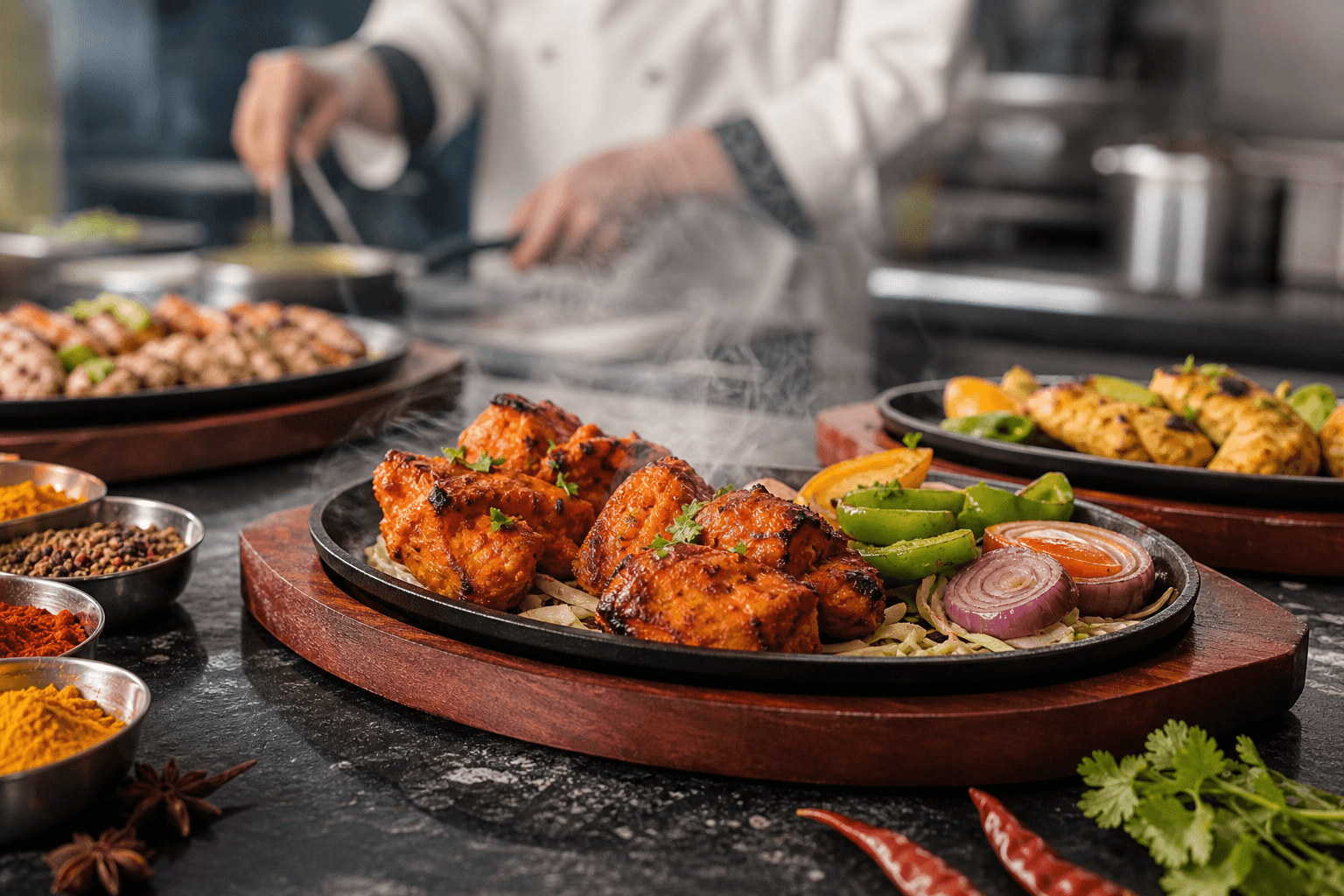
If you are evaluating sizzler platter styles for a restaurant or catering program, start with one core question: which shapes and materials fit your menu, throughput, safety procedures and catering logistics? "Sizzler platter styles" covers several shapes and finishes, but most professional operators rely on thick cast iron plates heated to very high temperatures for the theatrical sizzle and long heat retention. For quick background on plate material and commercial use, see the industry overview on cast iron sizzler plates and a practical note about high-volume sizzler service.
Quick definition: what a sizzler plate is and why it matters
What counts as a sizzler plate
A sizzler plate is a heavy, heat-retaining serving surface that is heated, then presented hot to create steam, sizzle and aroma at the table. Cast iron is the common professional choice because it holds heat and produces the characteristic audible sizzle when sauce or oil meets the hot metal. The plate alone changes service tempo, portion temperature and guest perception, so material choice matters as much as shape. See why cast iron is widely used for sizzlers.
Why material and heat retention matter
Heat retention controls how long the dish stays hot at the table and how long the cooking effect continues after service. Cast iron offers long hold time, while thinner metals or ceramic reduce hold time and the theatrical impact. Choose plates that match your ticket times and turnover so sizzlers deliver the expected experience without blocking the line.
How plate material and shape change portioning and presentation
Oval plates for mixed mains and flexible plating
Oval cast iron sizzlers are versatile. They let you arrange a protein, vegetables and a side on one surface and are well suited to mixed tandoori platters or a Paneer Shashlik Sizzler. If your menu includes several mixed plates, oval plates reduce SKUs and speed plating.
Kadai-style and small bowls for single-serve theatre
Kadai-style sizzlers mimic a small wok shape and are ideal for single-serve, high-drama items or saucier preparations. They contain steam and present taller compositions, but they demand stricter recipe weights to keep portions consistent and avoid underfill or overfill.
When shape hurts portioning or increases waste
Very large or unusual shapes can increase waste if menu items do not scale to the surface. Rectangular plates sometimes force awkward plating and slow the line, and deep kadai shapes can hide small portions. Match shape to the item first, then to expected portion counts for Happy Hour and late-night service.
Which styles suit Indian fusion and Indo-Chinese menus
Vegetarian and paneer sizzlers
Vegetarian sizzlers such as Paneer Shashlik perform best on oval cast iron plates that allow grilled paneer, vegetables and chutney or sauce to be arranged without rapid steaming. Oval plates are also useful for shareable vegetarian mains, while mini-kadai plates work for single-serve, saucier paneer dishes. See local menu examples and portioning on La Tikka's Kitchener and Hamilton menus.
Indo-Chinese and noodle presentations
Indo-Chinese items like Hakka noodles or chili momos can adapt to sizzler service, but saucy recipes generate more steam and splatter. Avoid very shallow, open plates for sauce-heavy noodles; choose a slightly recessed oval or kadai shape to limit splatter and retain heat without creating a safety problem.
Happy Hour portions and shareables
Happy Hour and late-night crowds favour small-share sizzles that travel quickly from kitchen to table. Smaller oval or mini-kadai plates sized for two to three people reduce food-cost risk and speed plating. If you operate daily Happy Hours, model portion sizes against price points and test plating times during peak periods before placing a large order.
Service logistics and equipment you must plan for

Heater types and throughput
Heating method is an operational decision. Options include stovetop preheat, dedicated sizzler platter heaters, and electric countertop warmers. For high-volume restaurants and catering, specialized sizzler heaters increase throughput because they standardize plate temperature and free cooktops for other tasks. Consider heater footprint and fuel type when planning kitchen layout and storage.
How heating choice affects plating time and ticket flow
Preheating on a stove works for small batches but ties up burners. Electric heaters or dedicated racks let multiple plates heat concurrently and reduce last-minute bottlenecks. Calculate peak simultaneous sizzler orders and size heater capacity to meet that peak plus a buffer. If late-night bar traffic drives spikes, add heater capacity rather than relying solely on stovetop preheat.
Safety, guest experience and table protection tradeoffs
Safe carrying and server training
Hot sizzler plates require explicit server training. Teach safe carry techniques, use heat-resistant gloves or liners when needed, and require two-person carries for heavy plates. Use a short verbal script so guests know the plate is hot and where to place it. Standardize the approach in your service manual and rehearse with staff during pre-shift meetings.
Table protection options and service scripts
Protect tabletops with wooden or insulated trivets that accompany the plate. Use a consistent script such as, "This will be served on a very hot platter. May I place it on the trivet for you?" That manages expectations and reduces liability. Decide whether servers place the food on the trivet or leave the plated sizzler for guests to serve themselves, and make that choice consistent across FOH.
Catering and transport: on-site sizzle versus reheating
Transport and insulating cases
Transporting preheated cast iron plates is challenging. Insulated cases help but heat loss is significant over distance. For events in Kitchener or Hamilton, evaluate whether you will finish dishes on-site with portable burners or transport cold, plated food for reheating. La Tikka offers catering and can be a local reference for how sizzler items perform in event settings.
Reheating methods for event kitchens
Reheating on portable electric griddles or butane burners is common. The tradeoff is equipment rental and staffing versus delivering a true on-plate sizzle. For mid-sized events, plan a small staging area with a portable heater to finish a steady stream of sizzlers rather than attempting to transport large numbers of preheated plates.
When on-site finishing is worth the cost
On-site finishing pays when the theatrical sizzle drives perceived value or when plated temperature is a menu differentiator. For high-ticket events, the guest experience often compensates for the logistics. For routine office catering, prefer transportable, reheat-friendly presentations to reduce cost and complexity.
Cleaning, maintenance and staff training requirements

Daily cleaning and seasoning
Cast iron sizzler plates need specific care. Clean immediately after service with hot water and a brush, avoid harsh detergents that strip seasoning, and re-season periodically to prevent rust. Follow supplier instructions to retain non-stick qualities and ensure food safety.
Storage and inventory planning
Cast iron is heavy and requires secure shelving with easy access. Keep more plates than your peak simultaneous demand to allow rotation during cleaning. For combined dine-in and catering schedules, align inventory to the maximum of kitchen demand plus two spare plates per SKU.
Training checklist for servers and cooks
- Heat handling and correct glove use for cooks and servers
- Plating order and timing to prevent cold or overcooked food
- Table protection placement and the guest warning script
- Cleaning, reconditioning and seasoning steps after service
- Catering transport and on-site finishing procedures
Purchase checklist and supplier questions to ask before you buy
Decision criteria
- Shape compatibility with core menu items and portion sizes
- Material and thickness for hold time, weight and durability
- Heater compatibility and footprint for your kitchen layout
- Cleaning and seasoning instructions and warranty terms
- Local availability or service support in Ontario for replacements and extras
Sample supplier questions
- What is the exact plate thickness and estimated hold time at service temperature?
- Which heater models do you recommend for this plate shape and how many plates per heater can run simultaneously?
- Do you supply pre-seasoned cast iron or instructions for seasoning and reconditioning?
- What warranty and replacement parts are available in Canada, and where is local support located?
- Can you supply a plated mock service sample to confirm portioning and carry weight?
Printable operator checklist
Before you sign a purchase order, confirm the following with kitchen leads and FOH managers: plate shape approved, heater capacity matched to peak demand, cleaning and storage mapped to available space, server training scheduled, and catering transport tested on a representative delivery route. If you would like to test sizzler items in a local setting, review La Tikka's catering options and menus for practical examples of portion sizes and plating styles on the Kitchener menu and the Hamilton menu.
Frequently asked questions
How should I safely serve sizzlers so guests do not get burned?
Use trivets or wooden boards to protect the table, train servers on two-handed carries for heavy plates, and use a short verbal script warning guests that the platter is very hot. Provide extra napkins or a small stand to allow the guest to remove food safely. Standardize the approach and practice with staff during service simulations.
What type of heater do I need for high-volume sizzler service?
High-volume operations benefit from dedicated electric or gas sizzler heaters that hold multiple plates at set temperatures, which frees burners and stabilizes service. For smaller or occasional sizzle items, stovetop preheat can work but plan for backup heaters during peak hours and test throughput against peak simultaneous orders.
Can sizzler plates work for vegetarian and Indo-Chinese dishes?
Yes. Vegetarian items such as paneer sizzlers and Indo-Chinese noodle presentations adapt well, but watch sauce volume and steam. Choose slightly recessed oval or kadai shapes for saucy dishes and ensure plating prevents splatter and excessive steam at the table.
How should I transport and reheat sizzlers for catering events in Kitchener or Hamilton?
Transport in insulated cases for short distances and finish on-site using portable griddles or burners for reliable sizzle. For longer drives, transport cold and reheat or prepare a reheat workflow at the venue to avoid heat loss and service delays. Test transport and reheating on a trial delivery to confirm timing and staffing needs.
Next step
To discuss menu fit, portion sizes or catering workflows for sizzler platter styles in a local context, contact La Tikka Indian Fusion to review how sizzler items perform on an Indian fusion and Indo-Chinese menu. Visit La Tikka's contact page and menu PDFs for Kitchener and Hamilton to prepare your questions.
Authoritative references: NishienTerprise on cast iron sizzler plates and Chefstop on heater and serving notes provide practical background for material and equipment choices. For local menu examples and catering services, see La Tikka's menu PDFs for Kitchener and Hamilton.
Would you like to schedule a tasting or review sizzler portion tests with La Tikka's catering team?